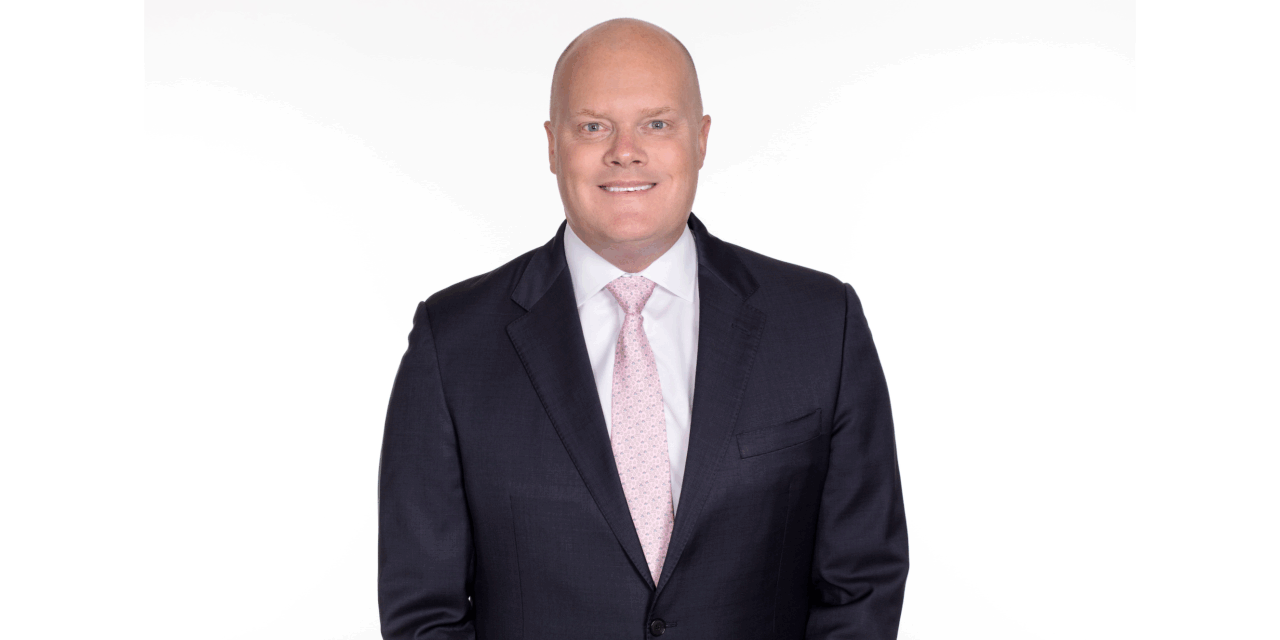
Following the company’s recent brand refresh, Trimedx CCO Ted Dunham discusses what drove the change and why the company felt the timing was right.
Interview by Alyx Arnett
Trimedx recently introduced a new brand identity designed to better reflect how the company has evolved as healthcare organizations face increasing demands around technology management, cybersecurity, and operational performance.
While the rebrand doesn’t change the foundation of the business, it aims to better communicate the broader mix of services, technology, and expertise Trimedx now provides.
Following the announcement, 24×7 spoke with chief commercial officer Ted Dunham about what prompted the update, why the company felt the timing was right, and how changing customer needs have shaped Trimedx’s evolution over the past decade.
What prompted Trimedx to update its brand at this point in the company’s evolution?
Trimedx has evolved significantly in recent years, expanding its expertise, technology capabilities, data intelligence, and platform investments. As healthcare organizations increasingly seek predictive intelligence, AI-enabled insights, operational optimization, and enterprise-wide visibility, our refreshed brand reflects the full breadth of value Trimedx delivers today. It more clearly communicates our capabilities, better represents who we are as an organization, and supports the future we are building alongside our clients.
You’ve said the new brand reflects the company Trimedx has already become. What are the biggest changes in the business over the past several years that the new brand is intended to capture?
The new brand reflects Trimedx’s growth beyond traditional HTM offerings into a more connected combination of expert services, advanced technology, and performance intelligence. Trimedx’s clinical asset dataset now spans more than 7.4 million device records, nearly 30 years of insights, and visibility into 90–95% of active US medical equipment. That foundation powers TMX, the company’s technology platform for performance intelligence, and has expanded Trimedx’s ability to help health systems maintain, optimize, protect, and locate clinical assets while making more informed operational and financial decisions.
What trends in HTM and healthcare delivery have had the biggest influence on how Trimedx has evolved over the past decade?
Healthcare organizations today face increasing pressure to improve operational performance, strengthen cybersecurity, manage growing technology complexity, and make smarter capital investment decisions. At the same time, advances in data analytics and AI have created new opportunities to turn clinical asset information into actionable insights.
Trimedx recognized early that healthcare organizations would need more than traditional service delivery. By investing proactively in technology, cybersecurity, data intelligence, and AI-native capabilities, we’ve built a more connected approach that helps health systems drive performance, reduce risk, and make smarter decisions across the enterprise.
As more clinical asset data becomes available, how do you see health systems using that information differently than they do today?
As data becomes more accessible and actionable, health systems will increasingly move from reactive decision-making to proactive performance management. Trimedx has spent decades building the industry’s most comprehensive clinical asset dataset, which now underpins deeper insights and more informed decision-making.
For example, a health system may traditionally replace a device based on age alone. With access to Trimedx’s clinical asset data and AI-driven analytics, decision-makers can instead evaluate actual utilization, maintenance history, cybersecurity risk, and peer benchmarking data. The analysis may reveal that some devices can safely remain in service for several more years, while others should be replaced sooner due to higher risk or demand. This allows leaders to prioritize investments more effectively, avoid unnecessary capital spending, and ensure equipment is available where it’s needed most.
When you talk with healthcare leaders today, what conversations are happening more often than they were five or 10 years ago?
In the past, conversations were largely focused on equipment maintenance and service delivery. Today, healthcare leaders are increasingly asking how AI can help them make faster, more informed decisions and better protect connected medical devices from growing cybersecurity threats. They’re looking for predictive insights, greater visibility into their technology environments, and ways to reduce risk while improving operational performance. At the same time, there is growing recognition that HTM is no longer just a support function. It has become a critical contributor to health system performance, helping organizations navigate the intersection of technology, cybersecurity, data, and patient care.
What do you think the role of an HTM partner will look like five years from now, and how is Trimedx preparing for that future?
The HTM partner of the future will play a broader strategic role, helping healthcare organizations combine expertise, technology, and data-driven intelligence to improve performance across the system. Trimedx is ready for that future today. Through years of investment in our technology platform, AI-native capabilities, cybersecurity expertise, and industry-leading clinical asset dataset, we’ve built a connected portfolio that health systems can rely on as their clinical technology environment grows more complex.
Photo caption: Ted Dunham, chief commercial officer of Trimedx
Photo provided: Trimedx