Hospitals facing reimbursement pressure may be overlooking one of their biggest opportunities for savings: better use of the equipment they already own.
By Patrick Gale, vice president of clinical asset management, TRIMEDX
Hospitals continue to face increasing financial uncertainty as healthcare reimbursement rates shift and margins tighten. Medicare reimbursed hospitals at just 83 cents on the dollar in 2024, driving more than $100 billion in underpayments. At the same time, rising labor, supply, and technology costs continue to erode financial stability. Entering 2026, operating margins have contracted further, intensifying scrutiny across every department.
In response, many health systems feel pressure to cut budgets, delay capital purchases, or reduce staff. These actions may create short-term relief, but they rarely address the root causes of financial strain. In many cases, they introduce new risks to patient access, workforce sustainability, and clinical performance.
A more sustainable path forward requires a shift in mindset. Clinical technology represents one of the largest and least optimized investment categories within a hospital. When managed strategically, it offers real opportunities to stabilize margins without compromising care.
Data That Expands Strategic Options for Cost-conscious Clinical Operations
For many health systems, a key question is how to utilize existing assets and investments to better meet gaps in demand. The challenge lies in how well those assets are understood and managed. Fragmented data sources, inconsistent workflows, and limited visibility prevent leaders from making informed decisions about equipment use and support.
Comprehensive and standardized data management is foundational to expanding strategic options for efficiency. When health systems lack reliable information on equipment downtime, utilization, or location, inefficiencies and opportunities for improvement remain hidden. These gaps in visibility can accumulate costs quickly across maintenance, rentals, labor, and lost productivity. One prime example is prolonged equipment downtime, which leads to higher repair costs and limits clinical throughput. When equipment is unavailable, scheduled procedures can be delayed or diverted. The effects often go unmeasured, even though they directly impact revenue and patient access.
When equipment is functioning and available, it is also critical to understand how and when it is contributing to clinical operations. Without consistent tracking, hospitals often purchase or rent equipment to meet perceived demand. Inventories may be underused or unevenly distributed across departments. Aligning accurate utilization with actual demand improves return on capital investments and reduces unnecessary additional spending.
Utilization is also an important metric for optimizing rental equipment management. Hospital rental costs are often 50% higher than expected. The devices are often procured to meet temporary or sudden spikes in demand. However, when those conditions change or subside, allowing this equipment to remain on-site and unused accrues unnecessary ongoing costs.
Many of these gaps and inefficiencies directly impact the teams that interact with medical equipment every day. Nurses may spend up to an hour per shift searching for and cleaning equipment. Biomedical technicians can spend a similar amount of time locating devices for maintenance. These hours represent a loss of clinical capacity and reduced workforce efficiency.
Together, these challenges point to a common root cause. Health systems lack a unified, operational view of their clinical technology investments.
Strategic Levers That Increase Equipment Value and Improve Efficiency
Once health systems have better visibility into their technology environments, strategy can move beyond isolated fixes. The real impact comes from applying data to connect utilization, rentals, supply chain performance, and workforce efficiency.
Equipment utilization is a natural starting point. When leaders understand how often devices are used, where demand concentrates, and when gaps emerge, capital planning becomes more precise. Instead of responding to shortages with new purchases, organizations can assess whether existing equipment is simply in the wrong place or underused. This shift protects return on investment while preserving access to care.
Real-time location system (RTLS) data plays a critical role in enabling this shift. RTLS allows hospitals to track the location and status of both owned and rented equipment with far greater accuracy and less manual effort. When devices are visible across units and facilities, redeployment becomes a realistic option. Equipment can move to where demand exists rather than sit idle elsewhere.
This same visibility is essential for rental management. Without clear differentiation between owned and rented inventory, rented devices often remain in circulation longer than needed. RTLS data helps teams verify location, confirm usage, and trigger timely returns. When rental demand is tracked alongside existing inventory, health systems can reduce unnecessary accumulation of recurring expenses without disrupting care delivery.
Supply chain operations benefit from similar data integration. Maintenance delays often stem from slow access to parts or supplies rather than technical complexity. Standardized workflows supported by predictive insights allow teams to anticipate needs and shorten turnaround times. Faster repairs reduce downtime and ease pressure on frontline staff who depend on reliable equipment access.
Workforce efficiency improves as these capabilities align. Nurses spend less time searching for equipment when location data is reliable and up to date. BMETs can begin maintenance sooner when devices are easy to find, and service histories are accessible. Over time, these gains reduce frustration, support retention, and restore clinical capacity that is often overlooked in financial discussions.
An asset reallocation strategy helps to turn many of the insights of comprehensive asset intelligence into productivity. With consistent data across facilities, health systems can balance supply and demand dynamically. Equipment follows patient needs rather than departmental boundaries. This approach strengthens long-term resilience as the needs of a health system change over time, and strategic options to adapt to those shifts expand to include more economically efficient solutions.
With the combination of robust data and adaptable clinical asset management tactics, health systems can take a more strategic approach to one of the most challenging financial decision-making processes: capital planning. A strong understanding of equipment inventory provides a more complete perspective on where capital investments will meet the greatest need. Standardizing this process around a reliable, unified data source can simplify perceived opportunity costs when prioritizing equipment purchases.
The many equipment attributes that health systems need to track and document for these insights include utilization, location, service history, criticality to operations, remaining useful life, cybersecurity risk, and parts availability. With tools and processes like RTLS and reallocation, health systems can also objectively identify opportunities to fill needs with existing equipment resources, thereby maximizing the realized value of equipment and avoiding unnecessary additional expenses.
Underlying each of these levers is a broader operational lens. Total cost of ownership provides a framework that ties acquisition, maintenance, labor impact, downtime, and disposition together. When leaders evaluate equipment through this lens, decisions reflect long-term value rather than short-term cost avoidance.
Taken together, these strategies demonstrate that technology investments yield greater returns when they are governed with shared data and aligned incentives. RTLS data, standardized processes, and redeployment practices do not operate independently. Their value compounds when applied as part of a coordinated approach to clinical asset management.
Empowering Healthcare Teams and Service Areas Through Better Technology Governance
Adapting to declining healthcare reimbursement rates does not require sacrificing care quality or workforce stability. It requires a better understanding of how clinical technology supports daily operations. When vital teams, including nursing and HTM, have access to accurate data and efficient processes, they can focus on delivering value rather than managing workarounds. Equipment becomes an enabler of care instead of a source of friction.
Medical technology represents a significant investment for every health system. The more clearly organizations understand their inventories, utilization, and costs, the more effectively they can deploy these resources. With growing uncertainty surrounding healthcare reimbursement rates, data-driven equipment governance creates stability where cost-cutting alone cannot. By treating reimbursement volatility as an operational challenge, hospitals can protect margins, support staff, and sustain access to high-quality care.
About the author: Patrick Gale is vice president of clinical asset management for TRIMEDX and leads the company’s clinical asset management and informatics solutions aimed at enabling health system executives to achieve repeatable and sustainable financial and operational improvements within their clinical asset inventory. He joined TRIMEDX from GE HealthCare where he spent 13 years in several leadership roles co-creating tailored healthcare technology management programs with healthcare providers. Patrick earned a Bachelor of Science in Business Administration from the University of Illinois at Urbana-Champaign.

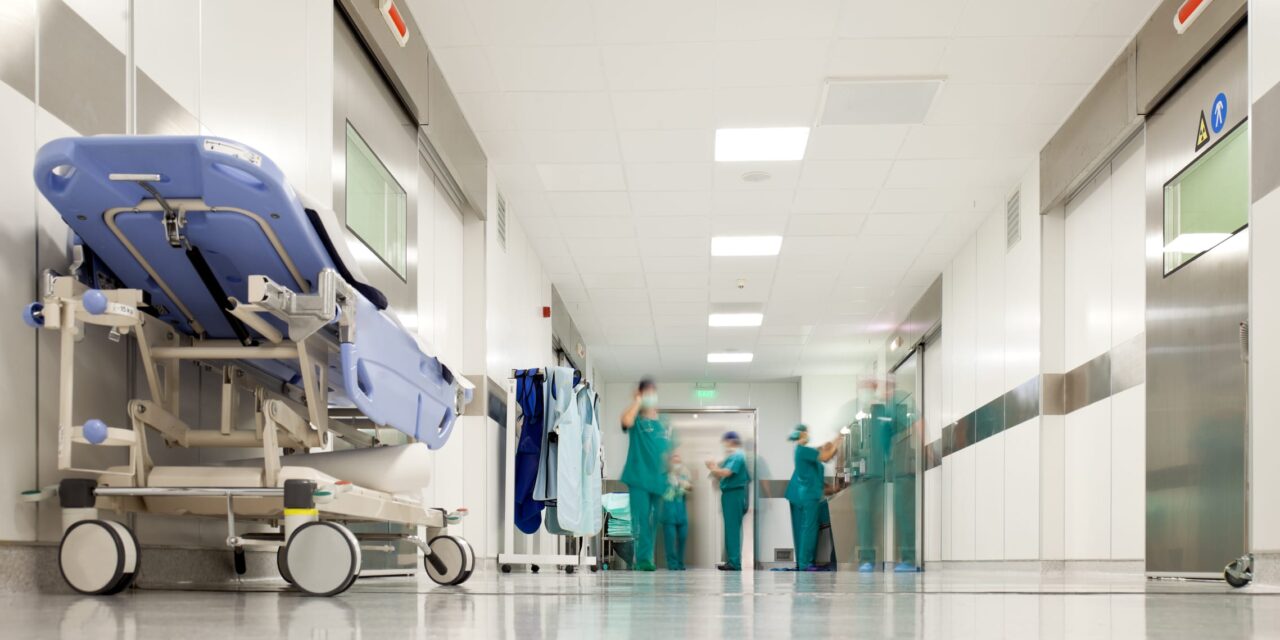
ID 25068453 © Viktor Levi | Dreamstime.com