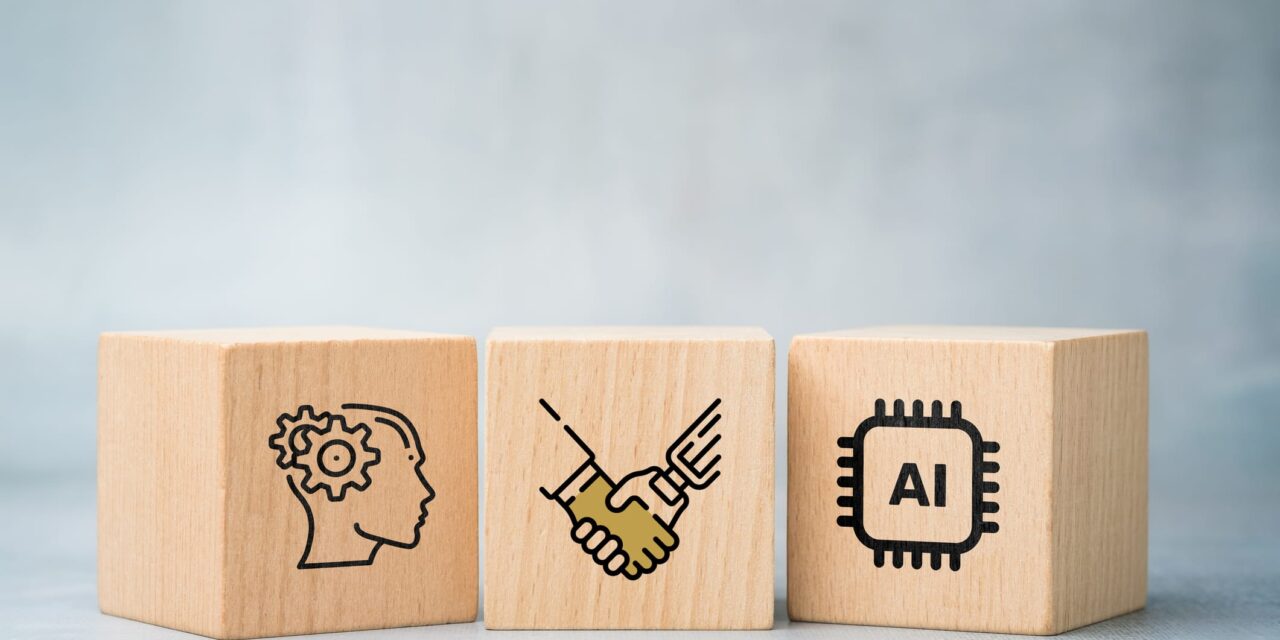
From preserving institutional knowledge to accelerating technician development, AI could become one of HTM’s most valuable workforce tools.
By Rob Moorey, president of clinical engineering at TRIMEDX
The healthcare technology management (HTM) industry is facing a looming labor shortage and must attract enough skilled professionals to meet future demand. The industry is grappling with an aging workforce, a shrinking traditional talent pool, and increasingly complex medical equipment. Healthcare organizations need new ways to preserve expertise, develop new talent faster, and maintain equipment reliability. When used thoughtfully, AI offers a path to do all three.
AI cannot take over the work of HTM professionals. Healthcare organizations can, however, harness it to augment human expertise, attract the next generation of technicians, and help sustain care quality through one of the industry’s most significant demographic and technological shifts.
Helping Technicians Work More Efficiently
About a third of HTM professionals are over the age of 55, and many organizations are preparing for a “silver tsunami” of retirements. Compounding the issue, educational programs are producing fewer biomedical technicians, making it difficult to replenish the talent pipeline fast enough. While some organizations are wisely investing heavily in apprenticeships, career development programs, and alternative recruiting strategies, the broader industry is contending with how to replace both the number of technicians leaving the workforce and the institutional knowledge they possess.
One of the most immediate benefits of AI is helping technicians reduce administrative burdens and improve day-to-day efficiency. As retirements create staffing pressures across the industry, AI offers the ability to streamline troubleshooting, surface critical information faster, and reduce time spent searching for answers. This allows technicians to focus on high-value work supporting patient care. In an environment where every skilled technician matters, these gains have a meaningful impact.
Preserving Institutional Knowledge
AI in the workforce could help address the pressing challenge of institutional knowledge loss. Each retirement risks taking decades of hard-earned expertise with it—knowledge newer technicians have not yet had the opportunity to develop.
When veteran technicians retire, their expertise doesn’t have to leave with them. AI can help capture and organize troubleshooting insights, repair history, and best practices accumulated over entire careers, making that know-how accessible to the next generation of technicians when they need it most.
If a newly hired technician responds to a device problem they’ve never encountered before, they are no longer forced to wait for an experienced colleague to become available. They can use AI to find recommendations and step-by-step repair guidance.
To realize these benefits, organizations need more than AI tools alone. They also need access to high-quality, real-world service and equipment data, along with a knowledgeable, data-rich partner capable of turning that information into actionable insights.
Bringing New Energy to the Talent Pipeline
Every profession experiences moments that redefine its future. For healthcare technology management, AI may represent one of those inflection points because it changes how technicians work and how the profession is perceived.
At a time when many technology-minded students are drawn to software engineering, data science, and other digital careers, AI presents an opportunity to reposition clinical engineering as a field where innovation directly supports patient care. It also offers a compelling career path for people who want to work with advanced technologies but may not want to pursue a traditional four-year degree, thanks to apprenticeships, technical education, and other workforce development pathways.
By incorporating advanced technologies into everyday workflows, healthcare organizations can prove that HTM professionals are not simply maintaining equipment—they are leveraging cutting-edge tools to keep critical medical technologies safe, reliable, and available. That shift has the potential to attract a new generation of talent eager to apply AI in meaningful, real-world ways.
Accelerating Technician Development
Attracting new talent is only part of the equation. Organizations must also help early-career technicians develop skills and confidence. Many of tomorrow’s HTM professionals are already using AI chatbots to learn, solve problems, and complete everyday tasks.
Hands-on experience, mentorship, and continuous learning will always remain the foundation of clinical engineering. AI can strengthen those efforts by giving technicians faster access to guidance and insights, helping newer professionals build confidence more quickly while allowing experienced technicians to focus on personalized mentorship, complex problem-solving, and passing along the expertise that only comes with experience.
Keeping People at the Center of HTM
Many technicians understandably wonder what AI’s growing role could mean for their careers. Half of Americans share those worries about AI in the workforce, according to one survey. These concerns deserve thoughtful consideration, and leaders should address them openly by communicating how AI will be used, inviting feedback, providing training, and reinforcing that its purpose is to support—not replace—the workforce. The future of healthcare technology management is not one where AI replaces technicians. It is one where technicians are empowered with better tools.
Clinical engineering remains a people-centered profession built on problem-solving, collaboration, and trust. Technicians do far more than repair medical devices; they partner with clinicians, navigate complex situations, and apply judgment shaped by experience. AI cannot replicate the critical thinking, adaptability, and human relationships that define the profession.
Earning Technician Confidence
In addition, technicians may have fair concerns about the reliability and accuracy of AI. A recent survey found most Americans don’t fully trust AI yet. Health care is a high-stakes environment where decisions can directly affect patient care, leaving little room for error. As with any transformative technology, trust will not be built overnight—it must be earned through transparency, reliability, and responsible implementation. Leaders should make an intentional effort to help veteran technicians become familiar with the evolving technology. According to Pew research, people under 30 are more likely to already be using and knowledgeable about AI than older Americans.
Organizations have a responsibility to establish clear governance, validate AI-generated recommendations, provide training, and ensure humans remain accountable for every clinical engineering decision. AI should inform decisions, not make them independently.
Over time, confidence will grow not because of the technology itself, but because technicians consistently see that it delivers accurate, meaningful support while reinforcing their unique expertise.
Accelerating the Future
AI can do more than help technicians work more efficiently. When implemented thoughtfully, it has the potential to accelerate the development of new talent, preserve institutional knowledge, and strengthen the human workforce. As the HTM profession navigates workforce shortages and rapid technological change, organizations that embrace AI to empower people will be better positioned to build a resilient workforce capable of supporting safe, reliable patient care for years to come.
About the author: Rob Moorey serves as president of clinical engineering for TRIMEDX. Moorey has been with TRIMEDX for over nine years and has served as senior vice president of customer delivery and division vice president during that time. Before joining TRIMEDX, he spent eight years working for Aramark Healthcare Technologies in various leadership roles and began his career as a United States Air Force Biomedical Equipment Technician, stationed at Andrews Air Force Base outside Washington, DC. Moorey earned his bachelor’s and master’s degree in Healthcare Administration from Wayland Baptist University in Plainview, Texas.
ID 408625450 | Ai © Weerapat Wattanapichayakul | Dreamstime.com




I concur with the vision, but its implementation is dependent upon the quality of data available to AI systems. I worked with equipment management database systems from the day I entered clinical engineering and on and off for forty-plus years afterwards, and one of the constants throughout was data quality was a beast to even attempt to manage.
Constraining entries to pull-down lists and check boxes helped somewhat, but even there constraints had to sometimes be built into code, e.g., to avoid mutually incompatible field values from being saved. And forget about quality control over text entries. Seriously. Just forget about it.
AI could be a help here. It could, for example, ask “Is that all you want to report? It doesn’t seem to tell me what you did.” God knows that will go over well with technicians.
Or it could prompt with “The repair for 98% of all reports of “BROKEN” for this make and model has been “FIXED”. That will be a great help, I’m sure.
The reality was that nurses had plenty of other priorities requiring their attention than fully describing the symptoms of a failed device, technicians had their backlog as well, and many technicians were not skilled at describing what they did to diagnose a failure and report their actions to repair a failed device.
For AI to be effective, both human and technological systems may (will?) have to finally face and address the issues .that have yielded such poor data quality for decades.
It’s worth doing.