
The project focuses on using artificial intelligence to automate security updates and protect hospital equipment from cyberattacks.
Siemens Healthineers has entered into a project agreement with the Advanced Research Projects Agency for Health to conduct research on enhancing the cyber resilience of medical devices. The company will serve as the lead research institution for the Secure Healthcare Infrastructure Enhancement and Defense project, which is part of the federal Universal Patching and Remediation for Autonomous Defense program.
The collaborative project has a Phase I budget of $6.9 million. Siemens Healthineers will work alongside Siemens Corp, Axonius, and Kraetonics to develop an autonomous cyberthreat solution. The goal is to enable proactive security updates, which may reduce the manual effort and uncertainty currently involved in securing hospital environments, according to a Siemens Healthineers press release.
Data cited by Siemens Healthineers indicates that the average hospital faces more than 2,300 cyberattacks every week. These incidents have cost the healthcare industry more than $77 billion since 2016, with over $15 billion in costs occurring in 2023 alone. Currently, 53% of all hospital equipment contains critical vulnerabilities, and the average time to apply critical security updates to that equipment is 491 days.
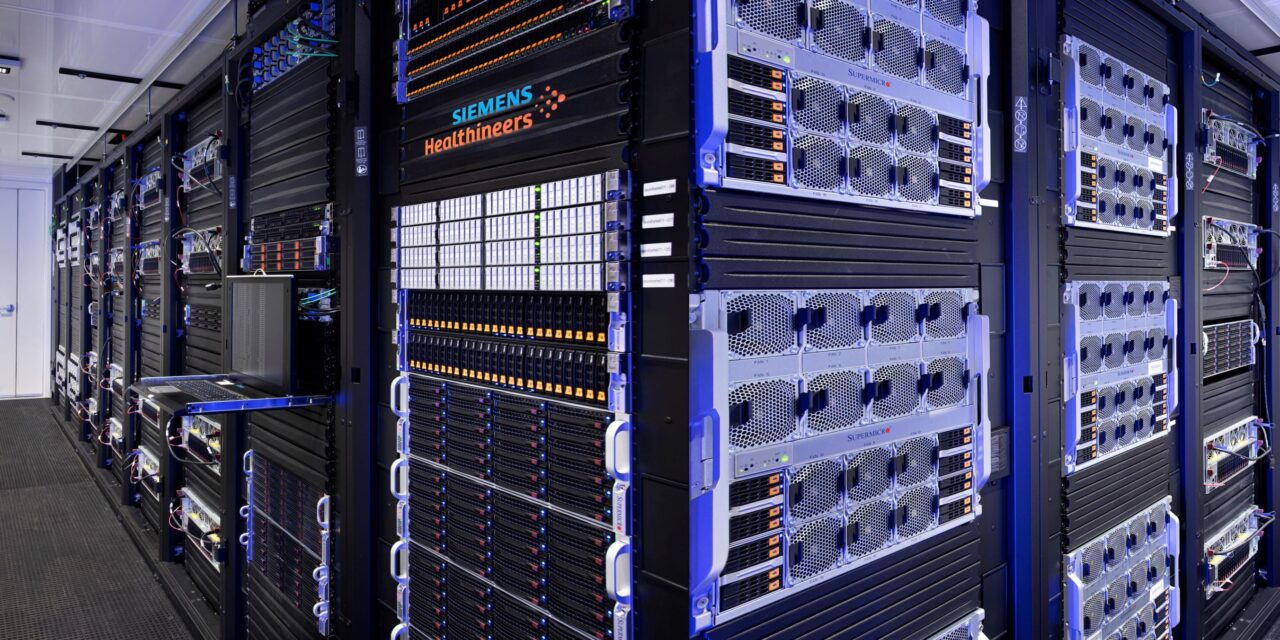
The Secure Healthcare Infrastructure Enhancement and Defense project will utilize exa-scale simulations to identify the most effective solutions for cyber resilience. These simulations will focus on device and equipment interactions within hospitals, particularly in specialty areas like imaging and laboratories. By using large-scale medical record data, the team intends to model how device disruptions affect patients and clinical staff.
“By determining effective remediation strategies, we help safeguard patient data and ensure the continuous operation of major imaging equipment,” says Dorin Comaniciu, SVP, artificial intelligence and digital innovation at Siemens Healthineers, in a release.
The research team is partnering with a variety of hospital systems that represent the range of medical facilities in the US, including both advanced centers and under-resourced rural community hospitals. These partnerships are intended to provide insight into real-world clinical workflows, operational constraints, and cybersecurity challenges to ensure the research delivers practical impact.
“By collaborating with experts and leveraging data and technology, we can deliver faster, more effective protection where it matters most,” says Carlos Arglebe, head of cybersecurity at Siemens Healthineers, in a release.
The Advanced Research Projects Agency for Health is a biomedical funding agency within the US Department of Health and Human Services that supports high-impact research to deliver health breakthroughs. The Secure Healthcare Infrastructure Enhancement and Defense project will also offer recommendations for alternative staffing, equipment, and patient scheduling to help maintain care during cyber incidents.
Photo credit: Siemens Healthineers