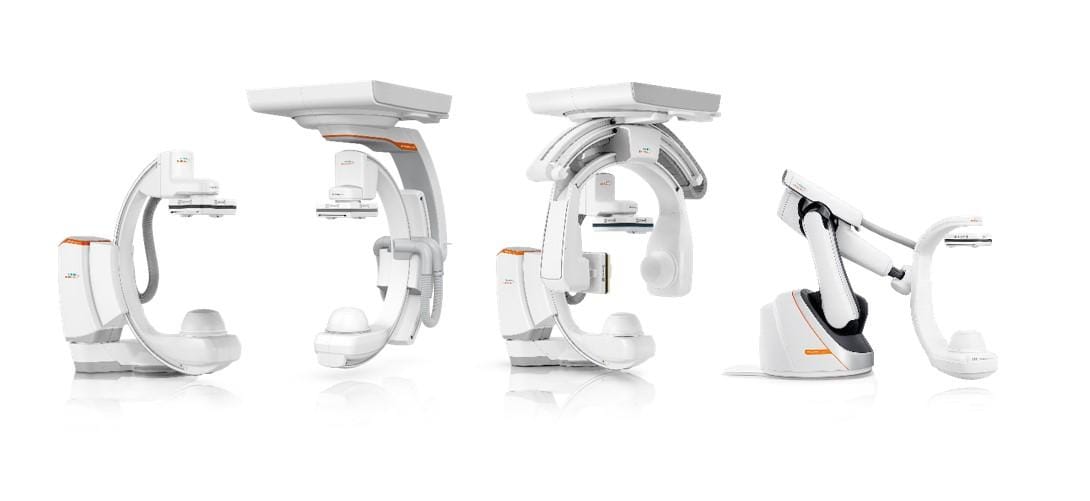
The new Artis portfolio features an AI-powered imaging chain designed to improve image quality and noise reduction during interventional procedures.
Siemens Healthineers has received US Food and Drug Administration clearance for six new systems within its Artis interventional imaging portfolio. These systems feature the Optiq AI imaging chain, which uses artificial intelligence (AI) to analyze and optimize image data in real time.
The cleared systems include floor, biplane, ceiling, and robotic versions of the Artis vision platform, as well as floor configurations for the Artis icono.explore and Artis genio platforms. According to a release from the company, these systems are designed to address various clinical uses, operational needs, and financial requirements.
AI-Driven Imaging and Denoising
The unifying feature of the new portfolio is the Optiq AI imaging chain. The technology applies deep-learning-based noise reduction across 2D imaging modes, including fluoroscopy, acquisition, and digital subtraction angiography. This denoising process is intended to provide consistent, high-quality visualization during interventional procedures.
“As more complex procedures come to interventional labs, increased precision is of paramount importance,” says Kris McVey, head of angiography in the advanced therapies business at Siemens Healthineers North America, in a release. “Our new Artis portfolio powered by Optiq AI delivers the high level of image quality clinicians rely upon to guide these intricate procedures—while taking into account the needs and budget of every type of healthcare facility.”
Operational Efficiency and 3D Applications
The Artis vision platform is designed for speed and precision in image-guided procedures. For facilities requiring high patient throughput, the Artis icono.explore is engineered to manage high volumes, while the Artis genio floor is positioned as a versatile system for a wide range of cases.
Beyond the AI imaging chain, the portfolio includes advanced 3D applications such as syngo DynaCT MORE, which reduces motion-related artifacts to enhance intraprocedural 3D imaging. To support workflow, the systems utilize a Touch UI touch screen for tableside access to system functions. Siemens Healthineers also implemented consistent controls across the portfolio to help clinical teams move between rooms with minimal variability.
Photo caption: Artis interventional systems
Photo credit: Siemens Healthineers