The five-year project funded by ARPA-H aims to develop ultra-high dose rate photon therapy for standard linear accelerators.
The Siemens Healthineers business area, Varian, has been awarded up to $60 million over five years by the US Advanced Research Projects Agency for Health (ARPA-H) to accelerate the development of photon Flash therapy. In addition to the federal award, Siemens Healthineers will invest $23 million as a cost share, bringing the total commitment for the project to $83 million.
Flash photon therapy is an experimental treatment modality that delivers radiotherapy more than 100 times faster than current technologies. The approach aims to reduce side effects and spare healthy tissue while treating tumors, particularly in cases where adverse reactions to surrounding tissue currently limit treatment options.
While Flash radiotherapy research has primarily focused on proton and electron beam platforms, both face constraints regarding scalability and access to care. Because radiotherapy is required for more than 50% of cancer patients and photon beams remain the standard of care, the company aims to create a scalable, cost-effective option that fits within existing clinical workflows and infrastructure.
“This investment from ARPA-H strengthens our efforts to explore the potential of photon Flash therapy and to widen the possibilities for patients who may one day benefit from it,” says Arthur Kaindl, head of Varian at Siemens Healthineers, in a release. “By building on the extensive installed base of C-arm linear accelerators, we aim to speed potential adoption and enable broader access as this work progresses.”
Industry Impact and Clinical Recognition
“The radiation oncology community is at the forefront of cancer care, and this ARPA-H award—a milestone as the first for our field —recognizes our specialty’s unique ability to safely and effectively treat cancer,” says Sameer R. Keole, MD, chair of the American Society for Radiotherapy and Oncology board of directors, in a release. “This support for advanced radiation therapy research will drive improved technologies, more efficient treatments, and new hope for people with cancer.”
Matthias Guckenberger, MD, president of the European Society for Radiotherapy and Oncology, notes that radiotherapy has historically been underfunded in global cancer research.
“ESTRO acknowledges that the US Government (ARPA-H) has identified this missed opportunity and is contributing to closing this gap through a substantial research grant for novel radiotherapy methodologies,” says Guckenberger in a release. “This milestone highlights the transformative potential of investing in radiotherapy innovation to improve outcomes for patients worldwide.”
The project positions Siemens Healthineers to transition ultra-high dose rate radiotherapy from an experimental stage toward a global standard of care. The company intends to use the five-year project to make cancer treatment more precise, efficient, and accessible.
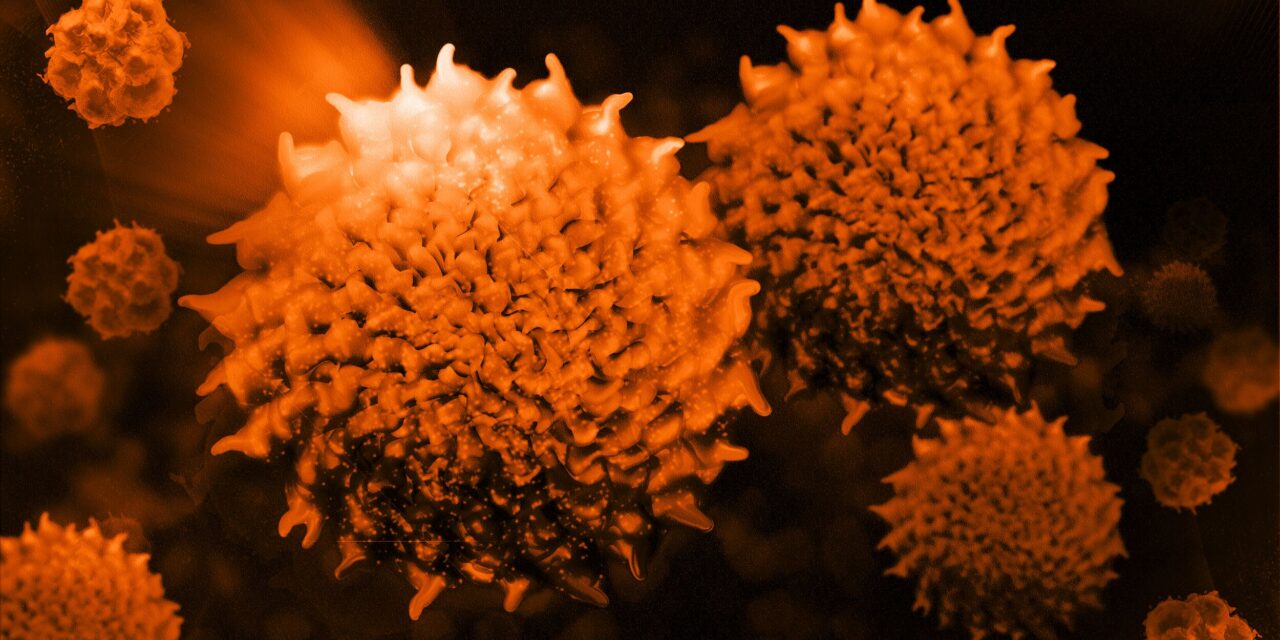
Photo caption: Cancer cells
Photo credit: Siemens Healthineer