The technology is no longer a standalone tool, but connective tissue linking devices, data, and clinical workflows.
By Steve Brown
In 2026, artificial intelligence (AI) is becoming more integrated into healthcare operations, often behind the scenes in areas such as equipment monitoring, signal analysis, and clinical workflows. Some of the same models used for coding assistance, image analysis, and clinical documentation are also being applied to identify patterns in equipment data and flag potential issues earlier than traditional alarm systems.
Healthcare technology has long operated in a reactive way. Devices fail, alarms sound, and teams respond. As AI and predictive analytics tools become more common, some hospitals are beginning to use earlier warning signals to identify potential equipment or system issues before failures occur.
For healthcare technology management (HTM) professionals, AI is increasingly being used to connect devices, data platforms, and clinical workflows. As those systems become more connected, the role of HTM may continue to expand beyond individual devices to broader operational reliability across hospital environments
From Equipment to Reliability Systems
Traditionally, HTM has been organized around assets like infusion pumps, ventilators, patient monitors, imaging systems, and surgical equipment. Performance has typically been measured through uptime, response time, and compliance with preventive maintenance schedules. Failures were generally treated as events with a clear start and finish.
That approach is beginning to evolve in 2026. Devices no longer generate data only when something breaks. They also produce continuous streams of telemetry, logs, configuration changes, and usage data. While some of that data may be incomplete or inconsistent, it can still help reveal patterns in device behavior over time rather than isolated incidents.
As interoperability improves, more of that information is becoming visible across systems. Device telemetry may flow into EHRs and other hospital platforms, while performance data is increasingly reviewed alongside factors such as environmental conditions, staffing patterns, and supply chain constraints. This can help identify issues that may not have triggered traditional alarms, such as calibration drift, uneven utilization across units, or differences in how similar devices perform in different settings.
As a result, HTM teams may increasingly focus not only on individual equipment failures, but also on broader patterns of system reliability across connected environments. The work shifts from simply responding to what broke to evaluating whether systems are showing signs of increased stability or potential risk.
Predictive Maintenance Changes the Stakes
Predictive maintenance is one area where AI may begin to have a more direct operational impact.
What may have started primarily as an efficiency tool could increasingly affect patient care and equipment reliability. Models trained on large volumes of equipment data can identify patterns that may precede failures days or weeks before a device would traditionally trigger concern. In some cases, maintenance activity may shift earlier, with a greater focus on prevention rather than repair.
As that happens, some traditional metrics may provide only part of the picture. Mean time between failures measures how often issues occur, but it may not fully capture the operational or clinical impact of a failure, such as delayed procedures, interrupted workflows, or patient care disruptions.
In response, some hospitals and vendors are beginning to evaluate reliability using a broader set of data points. Diagnostic logs, usage intensity, and environmental data may be combined to help estimate not only whether a device could fail, but also the potential operational impact of that failure. This can provide HTM teams with a more forward-looking view of equipment performance and risk.
At the same time, early warning systems are only useful if they are incorporated into existing workflows and acted on consistently. Otherwise, equipment failures may still occur despite earlier indicators being available.
Intelligence Inside the Maintenance Loop
As clinicians become more familiar with AI tools that summarize information and suggest interpretations, similar systems are beginning to appear in the biomed shop. These tools can aggregate service histories, compare performance across fleets of similar devices, and recommend maintenance schedules based on actual usage rather than static guidelines.
Part of their value is improved visibility into patterns that may otherwise be difficult to identify. Information spread across work orders, logs, and individual technician experience can become easier to evaluate collectively. For example, a group of infusion pumps showing calibration drift after a software update may not trigger alerts on any single device, but patterns across the fleet may still become apparent.
This may also introduce changes in how maintenance decisions are made. In some cases, the focus shifts from simply responding quickly to determining whether and when to act on earlier indicators or AI-generated recommendations. HTM teams may increasingly need to decide when to trust, question, or defer those recommendations as part of routine operations.
In organizations that adopt these tools more aggressively, those decisions may remain closely tied to equipment-level knowledge and operational context. In others, similar decisions may increasingly be made through broader IT, vendor, or administrative processes as AI systems become more integrated into hospital operations.
Governance Without Opting In
As AI becomes more involved in equipment reliability and operational decision-making, questions around trust and oversight may become more important. That includes trust in data quality, model performance, and vendor software updates that may increasingly affect clinical operations alongside hardware systems.
Hospitals may also find themselves managing AI-related systems and software updates alongside traditional equipment and supply chains. AI models evolve over time, parameters may change, and predictive software modules can be updated more frequently than physical equipment is replaced. As a result, software and model changes may carry operational implications that hospitals need to evaluate and monitor.
At the same time, governance responsibilities may shift as AI tools become more integrated into hospital operations. Decisions involving validation, thresholds, and acceptable levels of risk may increasingly involve HTM, IT, vendors, cybersecurity teams, and hospital leadership. Organizations that are less involved in those discussions early may have fewer opportunities to shape how AI systems are implemented and monitored later.
Cybersecurity concerns may also continue to grow alongside predictive and connected platforms. As more devices share data across systems, understanding where information originated, how it was processed, and how recommendations were generated may become increasingly important from both operational and patient safety perspectives.
Visibility, Regulation, and Reimbursement
Regulatory frameworks are beginning to adjust, cautiously. Early FDA efforts around adaptive trials and conditional approvals reflect growing recognition that continuously learning systems may require oversight approaches beyond traditional static validation methods. For HTM teams, this may introduce additional documentation, monitoring, and auditability requirements that extend beyond physical assets alone.
Reimbursement may also increasingly be tied to operational reliability and system performance. As payers pay closer attention to downtime, workflow disruption, and equipment-related operational impacts, investments in predictive maintenance and AI-guided operations may become easier for hospitals to justify financially. Reducing disruption in high-value clinical areas can affect both revenue and patient care delivery.
As reliability becomes more measurable through data and connected systems, operational decisions may also become more visible during audits, reviews, and post-incident analysis. Decisions that were once handled primarily within day-to-day operations may increasingly be subject to broader review and documentation requirements.
The Human Dimension
None of this diminishes the importance of human judgment, but it may change the conditions under which that judgment is exercised.
AI cannot replicate the situational awareness of a biomed technician walking into a unit at 2 am and noticing that something feels off. Experience still matters, particularly in environments shaped by aging infrastructure, constrained budgets, and unpredictable clinical demand.
What changes is the amount of information available and how early signals may appear. Patterns that may once have been dismissed as isolated issues can become easier to identify across connected systems and larger datasets. Experience that can evaluate and respond to early warnings may become increasingly important alongside traditional troubleshooting and repair skills.
As a result, the HTM workforce may continue to evolve gradually. Data literacy may become a larger part of technical competence, and logs, telemetry, and anomaly reports may increasingly be treated as operational and diagnostic inputs rather than background information. Engineers may also work more closely with IT and data teams to help ensure AI models reflect how equipment behaves in real clinical environments.
This does not represent a shift away from hands-on technical work. Instead, it may place greater emphasis on interpreting data, evaluating recommendations, and making operational decisions based on earlier indicators of risk or performance issues.
As hospitals gain more visibility into equipment performance and operational trends, the challenge may increasingly become how organizations respond to those signals and incorporate them into workflows and decision-making.
Steve Brown is the founder and CEO of CureWise, a platform applying multi-agent AI to precision medicine. A former HTM engineer and serial healthcare innovator, he holds over 300 patents in medical technology and AI-powered diagnostics.
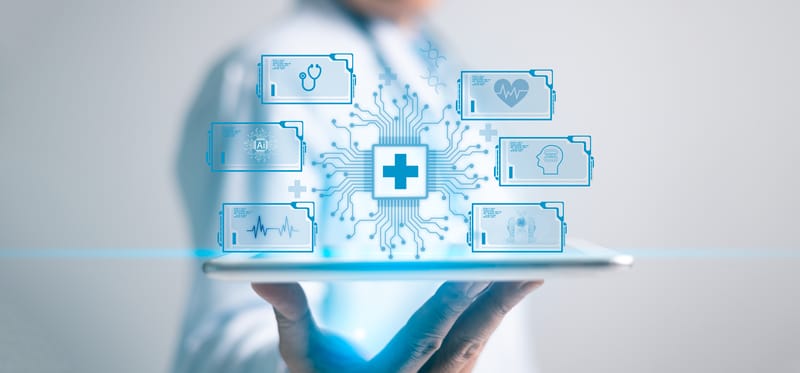
ID 335676346 © Thai Noipho | Dreamstime.com