Jun Yoshioka started his career without a department, office, or team. Today, he’s helping shape the future of clinical engineering in Japan and beyond.
By Alyx Arnett
Jun Yoshioka, PhD, didn’t inherit a clinical engineering department when he joined Yamagata University Hospital. He was the department. Hired as the hospital’s first clinical engineer, he was tasked with building the program from the ground up—an effort that eventually grew into centralized management of more than 1,500 medical devices.
Today, Yoshioka leads a team of 15 clinical engineers at Japanese Red Cross Sendai Hospital and has helped establish a clinical engineering diploma program in Myanmar. He also holds multiple patents and has developed a range of medical device innovations. Last month, AAMI named him its 2026 BMET of the Year.
“Receiving AAMI’s BMET of the Year Award is one of the greatest honors of my career,” Yoshioka says. “As someone who has spent more than 25 years in clinical engineering, it is both humbling and deeply meaningful to receive recognition from an organization that has contributed so much to the advancement of our profession worldwide.”
Building a Department on Trust
When Yoshioka arrived at Yamagata University Hospital as its first clinical engineer, many staff members had never worked with someone in the role before. There was no department, office, desk, or established place for clinical engineering within the hospital.
An early experience in the ICU underscored the challenge. When a ventilator alarm sounded and Yoshioka approached the device to help, a physician stopped him.
“Looking back, I do not blame anyone for that reaction,” Yoshioka says. “At the time, clinical engineers were not yet an established presence in the hospital, and our role was not well understood. I realized that before I could build a department, I first had to build trust.”
Rather than launching major initiatives, Yoshioka focused on the basics. He cleaned and organized equipment, responded quickly to requests, and worked to solve practical problems for physicians and nurses. As staff became more familiar with the role, they began to see the value clinical engineers could bring to patient care and medical device safety.
His first major opportunity came when he was asked to centrally manage a small number of syringe pumps. Success there led to responsibility for additional equipment, including patient monitors, defibrillators, ventilators, ECMO systems, and dialysis equipment. Over time, the one-person operation grew into a dedicated clinical engineering department.
“The most important lesson I learned is that a clinical engineering program cannot be built solely through technical expertise,” Yoshioka says. “Trust comes first. When healthcare professionals see that you consistently improve safety, reliability, and patient care, support follows naturally.”
An Innovation Philosophy Rooted in Listening
Because Yamagata University Hospital is an academic medical center, Yoshioka was able to combine clinical practice with research and education. “I believed that a successful clinical engineering department should not only maintain equipment but also advance knowledge,” he says.
That philosophy shaped Yoshioka’s approach to innovation. He says many of his projects begin with the question: What problems are patients and healthcare professionals facing that no one has solved yet?
“Many of the problems worth solving are not visible in technical manuals or research papers; they are discovered through direct human interaction,” he says.
One example is an oxygen cylinder alarm he co-developed with NEC—a Japanese information technology and electronics company—and local industry partners. The device was designed to address a common safety issue: healthcare workers relying on visual checks of oxygen cylinder pressure gauges and occasionally missing cylinders that were nearly empty.
The resulting alarm system continuously monitors cylinder pressure and provides visual and audible alerts before the oxygen supply is exhausted. According to Yoshioka, clinical evaluations showed the device reduced instances of empty cylinders while easing the burden of manual monitoring.
“What makes this innovation particularly meaningful to me is that it was born directly from frontline clinical needs,” Yoshioka says. “It transformed a common but often overlooked safety concern into a practical solution that helps protect patients every day.”
The project reflects a development philosophy Yoshioka calls the “Four S’s”: simple, safety, smart, and support. He says devices should be intuitive to use, prioritize patient safety, solve practical problems, and be backed by reliable long-term support.
Over his career, Yoshioka has applied that philosophy to a range of other technologies. Among them is VOLT BANK, a battery management system designed to prevent overcharge degradation and standardize charging infrastructure within hospitals. He has also developed what he describes as the world’s first waterless infusion pump tester, a pump tester for deep vein thrombosis prophylaxis devices, and a Wi-Fi-enabled infusion pump.
“My goal is always to bridge the gap between developers and clinicians,” he says.
Investing in the Next Generation
Despite his innovations and industry recognition, Yoshioka says education is the accomplishment he is most proud of.
He previously served as a faculty member at Gunma Paz University, where he helped prepare students for careers as licensed clinical engineers. He says one of the most rewarding parts of that work was watching students progress through their education, pass the national licensing examination, and begin caring for patients.
That commitment to education extended beyond Japan. Through his work with the Clinical Engineering Global Promotion Foundation, Yoshioka helped establish a clinical engineering diploma program in Myanmar and continues to support international workforce development initiatives.
“Medical equipment alone does not improve healthcare outcomes,” Yoshioka says. “Sustainable healthcare improvement depends on developing people, not just supplying technology.”
An Evolving Profession
In Japan, the role of a clinical engineer is distinct from that in many other countries. Clinical engineers are nationally licensed healthcare professionals who work directly with patients and operate life-support technologies such as dialysis systems, ventilators, ECMO, and cardiopulmonary bypass machines.
Yoshioka says the profession has changed significantly since he entered the field more than 25 years ago.
“When I began my career, the profession was largely built on two core responsibilities: operating medical devices and managing them safely,” he says. “Today, those responsibilities have expanded into four distinct pillars: device operation, equipment management, education of healthcare professionals, and technology innovation and development.”
Recent revisions to Japan’s Clinical Engineer Act have broadened the profession’s responsibilities, allowing clinical engineers to perform certain procedures that were traditionally carried out by physicians under established protocols and supervision. As a result, clinical engineers are becoming more involved in advanced clinical activities, including cardiovascular interventions, critical care procedures, and endoscopic surgery support, he says.
Even with those differences, Yoshioka says the profession shares a common mission worldwide.
“The greatest similarity is that clinical engineers around the world share the same ultimate goal: improving patient safety through technology,” he says.
The Next Phase of Evolution
Yoshioka believes the next phase of clinical engineering will be driven by the digital transformation of healthcare. As artificial intelligence, medical robotics, connected medical devices, and digital health platforms become more integrated into care delivery, clinical engineers will need expertise that extends beyond traditional equipment management.
“Future clinical engineers will need competencies not only in medical devices but also in software, data management, cybersecurity, interoperability, and digital health infrastructure,” he says.
Yoshioka also expects clinical engineers to play a larger role in community- and home-based care as remote monitoring technologies and connected medical devices move beyond the hospital setting. At the same time, he sees growing opportunities for specialization in areas such as extracorporeal circulation, dialysis, cardiac rhythm management, intensive care, and disaster medicine.
“Ultimately, the future role of clinical engineers will not be defined by managing machines alone,” he says. “It will be defined by managing the relationship between people, technology, and increasingly autonomous systems.”
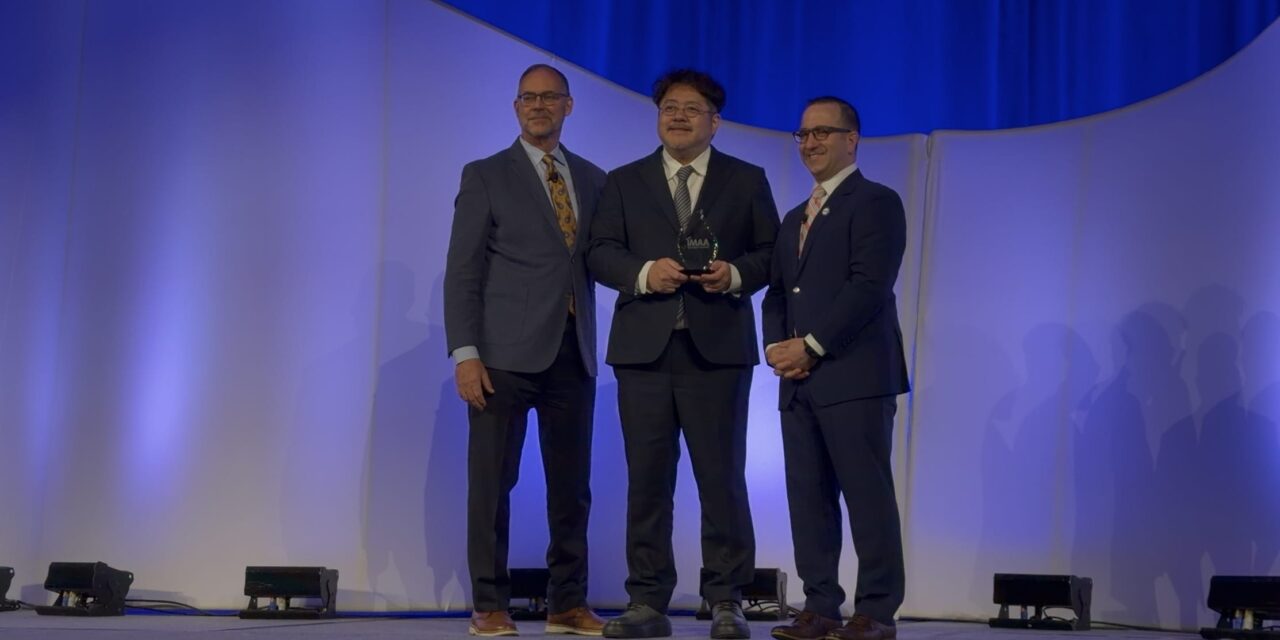
Photo caption: Jun Yoshioka, PhD, is presented with the 2026 BMET of the Year award at AAMI eXchange in Denver.
Photo provided: Jun Yoshioka
Alyx Arnett is chief editor of 24×7 Magazine. Questions or comments? Email [email protected].