
By Alyx Arnett

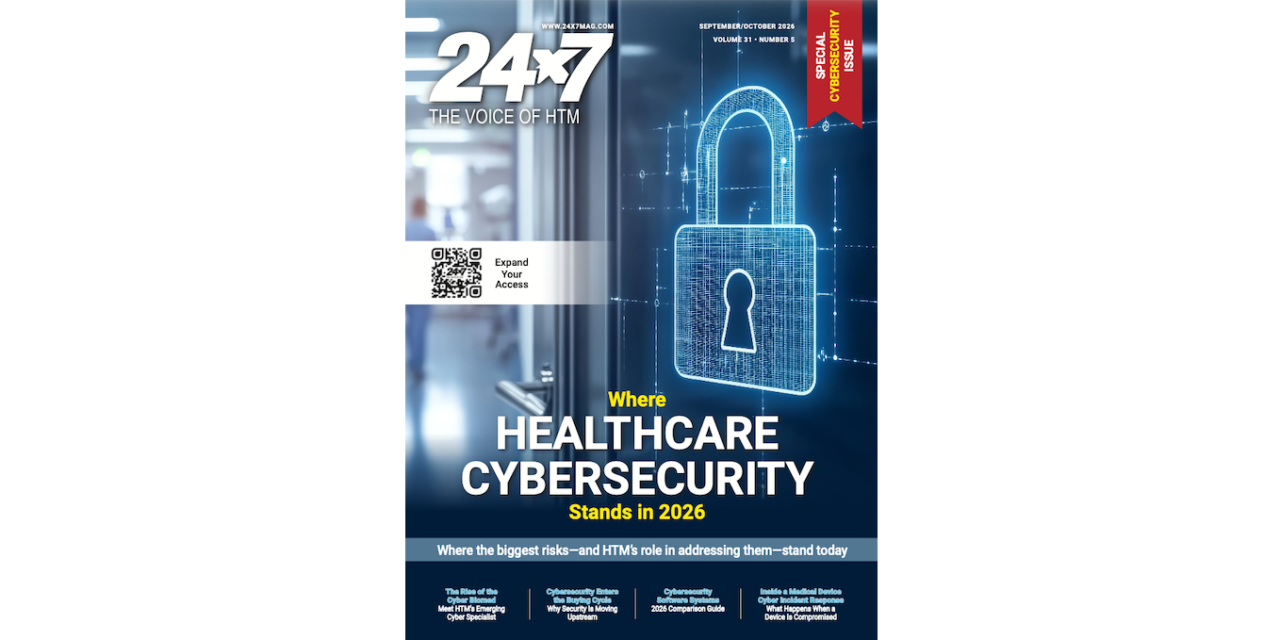
[The September/October 2026 issue of 24×7 is now available and is dedicated to medical device cybersecurity and the growing role of healthcare technology management professionals in protecting connected equipment. The issue examines everything from cyber risks in equipment purchasing and third-party relationships to the emergence of the “cyber biomed.” Read the full issue here or download below.]
Medical device cybersecurity has given us plenty to cover this year. Cyber incidents have hit hospitals and health systems directly, while attacks on medical device manufacturers and other vendors have shown how disruption can also come through third parties. FDA cybersecurity requirements are continuing to shape how manufacturers develop and support connected devices, and hospitals are facing newer questions around AI and how to plan for prolonged cyber disruptions to clinical care.
That’s why we decided to devote this special issue of 24×7 to cybersecurity. The stories in these pages look at the issue from several angles, but they have one thing in common: HTM has a role in all of them.
A few numbers from recent reports show what hospitals are dealing with:
- 4% of organizations surveyed for RunSafe Security’s 2026 Medical Device Cybersecurity Index reported a cyberattack or exploited vulnerability involving a medical device, up from 22% in 2025.
- Among those organizations, 80% said the incident had a moderate or significant impact on patient care.
- 6% said their organization has rejected a medical device because of cybersecurity concerns.
- 8% said their organization operates medical devices beyond the manufacturer’s end-of-support date.
- And in Verizon’s 2026 Data Breach Investigations Report, 32% of healthcare breaches involved a third party.
Behind those numbers are some of the questions we wanted to dig into with this issue.
What actually happens when a medical device is involved in a cyber incident? How much weight should cybersecurity carry when a hospital is deciding which equipment to buy? How do HTM teams manage cyber risk that comes through vendors and other third parties? And what happens when a rural hospital is expected to meet the same cybersecurity demands as a major health system?
We also take readers inside a $6.9 million Siemens Healthineers research project aimed at strengthening medical device cybersecurity and explore the rise of the “cyber biomed,” as HTM professionals take on roles that combine biomedical equipment expertise with cybersecurity. We look at continuous compliance for connected devices, securing the biomedical network, and new efforts to prepare hospitals to keep providing care when a cyberattack takes technology down.
We’ve also included a cybersecurity software comparison guide looking at tools available to healthcare organizations for managing these risks.
Not every hospital has the same resources, and not every HTM department will have the same role in cybersecurity. But the clinical and technical knowledge HTM professionals have is becoming increasingly important as healthcare works to secure a growing—and aging—inventory of connected technology.
We hope this issue gives you useful information for that conversation.