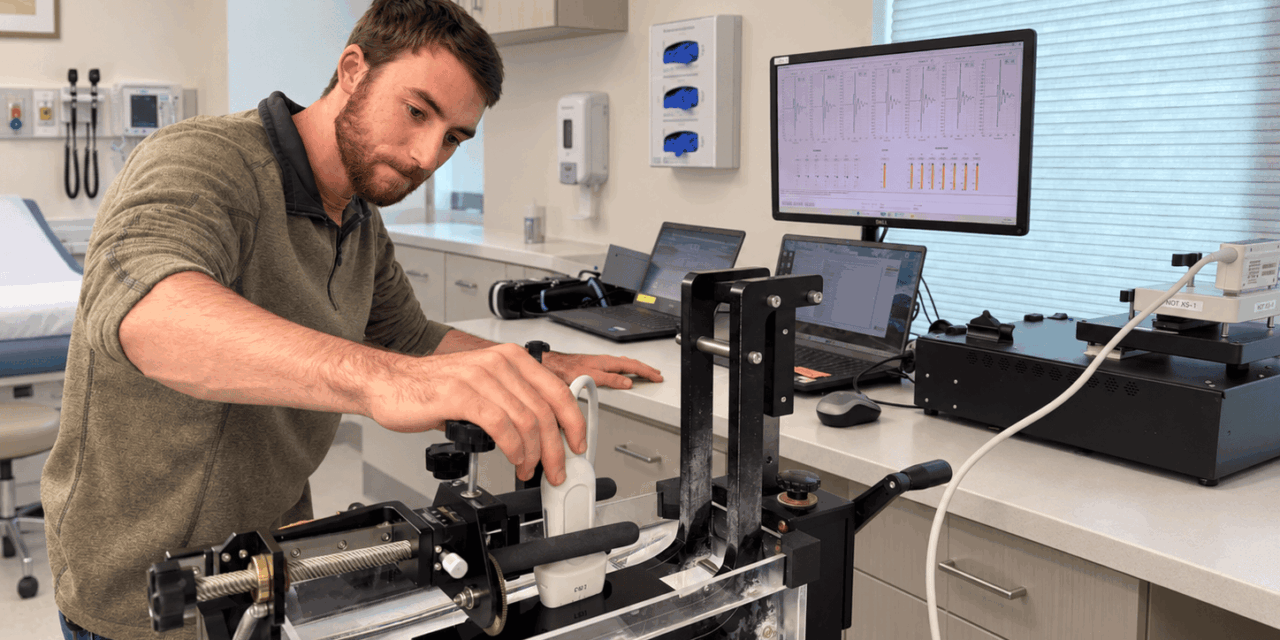
The expanded program provides HTM and clinical engineering teams with element-level probe performance data to help guide service, repair, and replacement decisions.
Acertara announced the expansion of its on-site ultrasound probe testing program, providing healthcare technology management (HTM) and clinical engineering teams with objective data on the health and performance of ultrasound probes across their fleets.
Using Acertara’s ATLAS acoustic measurement technology, Acertara technicians objectively evaluate probe performance at the element level and provide documented findings that help hospitals determine whether a probe should continue in service, be monitored, repaired, or replaced.
The program is designed to support a growing emphasis on objective, documented ultrasound quality assurance. Current accreditation guidance calls for routine evaluation of ultrasound systems and transducers, while the American Institute of Ultrasound in Medicine recommends regular monitoring of transducer performance, including element dropout.
Objective testing is also increasingly important in distinguishing high-quality medical device servicing from remanufacturing, according to a press release from Acetara, which notes that FDA guidance defines servicing as repair or maintenance intended to return a medical device to the safety and performance specifications established by the original manufacturer. Remanufacturing, by contrast, involves activities that significantly change a device’s performance, safety specifications, or intended use. Objective performance data provides a means of demonstrating that a repaired ultrasound probe has been restored to its intended performance rather than simply altered.
Acertara says it has been developing objective probe-testing technology for more than two decades. The company’s founders developed FirstCall, introduced in 2001, as an early commercially available ultrasound probe tester capable of objectively evaluating individual transducer elements. As probe technology became more complex, Acertara moved beyond the FirstCall platform and developed newer generations of probe-testing technology, culminating in ATLAS. Acertara stopped advancing the FirstCall platform many years ago, while legacy FirstCall-based technology remains in use within portions of the probe repair industry.
“Probe technology has changed dramatically since FirstCall was introduced,” says David Dallaire of Acertara in a release. “ATLAS represents the next generation of objective probe assessment. Rather than relying on visual inspection, subjective image review, or decades-old testing technology, HTM teams can receive quantitative information and documentation about probe performance and use that data to make better service, or probe retirement, decisions.”
Acertara can evaluate approximately 40 to 60 probes per day on-site. Customers receive documentation including phantom-based visual findings and inspection, element-by-element performance, electrical leakage results, and recommended next steps.
Acertara is also incorporating this same objective approach into its broader ultrasound field-service program, combining preventive maintenance, image-quality evaluation, probe testing, electrical-safety testing, and accreditation-ready documentation in a single service offering, according to the company release.
Acertara says the result “is a shift from reactive probe repair toward proactive, data-driven, ultrasound fleet management.”
Photo caption: Acertara’s probe testing program
Photo credit: Acertara