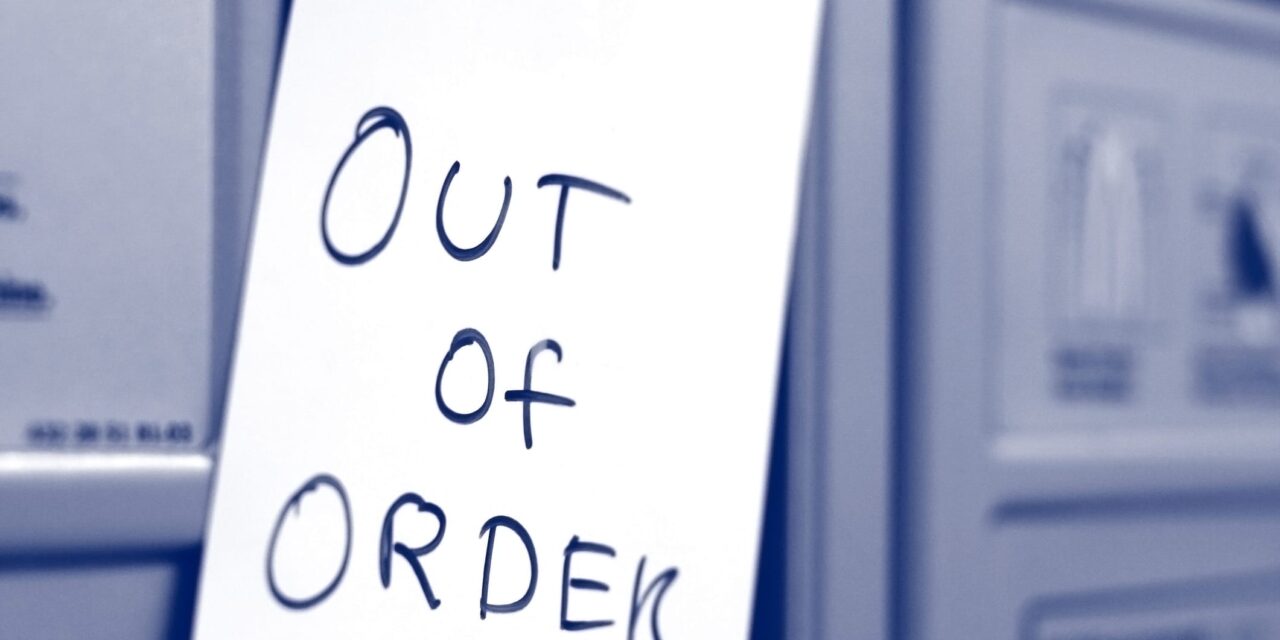
A project at Suhul Hospital in Ethiopia cut medical equipment downtime by tackling the maintenance and process issues keeping equipment out of service.
By Alyx Arnett
Medical equipment downtime can disrupt equipment availability and place added pressure on both maintenance and clinical teams. At Suhul Hospital in Ethiopia, those challenges prompted a closer examination of equipment downtime not only as a technical maintenance issue, but also as a process and performance problem.

In a quality improvement study, Hawelti Messele Gebremariyam, MSc, an industrial engineer and production planning and TPM coordinator, set out to understand where losses were occurring, what the major causes were, and whether Lean Six Sigma could provide a structured way to address them. The project used the DMAIC approach along with tools including process mapping, SIPOC, Pareto analysis, 5 Whys, 5S, and preventive maintenance.
“The goal was not simply to repair equipment faster, but to move toward a more systematic and proactive approach to equipment reliability,” Gebremariyam says.
In this Research Q&A, Gebremariyam discusses how the project reduced medical equipment downtime, the process issues that contributed to equipment failures, and what healthcare technology management (HTM) professionals can take from the approach.
[Editor’s Note: Read the study, “Reducing medical equipment downtime using Lean Six Sigma: a quality improvement project at Suhul Hospital, Shire,” in BMJ Open Quality.]
What were the key findings of the project?
The improvement was substantial. During the baseline period, we recorded about 89,735 minutes of medical equipment downtime. After implementing the improvement interventions, downtime was reduced to 292 minutes, representing a 99.67% reduction.
We also saw a reduction in recorded equipment defects from 842 to 43, while the process sigma level improved from 2.74 to 3.62.
More importantly, the project showed that the improvement was not dependent on a single technical intervention. We addressed several interconnected areas, including preventive maintenance, fault reporting, maintenance procedures, workplace organization, and communication between the people involved in equipment management.
For me, one of the main findings was that equipment reliability can improve significantly when maintenance is treated as a complete process rather than only as a repair activity.
Was there anything in the results that surprised you?
Yes. One of the most important observations was how much of the downtime problem was connected to process-related issues rather than purely technical equipment failure.
At the beginning, it would be easy to look at a piece of equipment that is not working and assume that the main problem is the machine itself. But when we analyzed the process more carefully, we found issues such as gaps in preventive maintenance, delays in reporting faults, delays in obtaining spare parts, and inconsistencies in maintenance practices.
That was particularly important for me as an industrial engineer. It reinforced the idea that reliability is influenced by the whole system surrounding the equipment.
The technical condition of the machine is important, but so are the procedures, information flow, responsibilities, spare-parts process, and communication between departments.
The project included several changes, including redesigned workflows, standardized fault reporting and corrective maintenance, 5S practices, and a preventive maintenance program. Which changes appeared to have the greatest impact on reducing equipment downtime, and why?
I would not attribute the improvement to one intervention alone. The strongest effect came from combining several relatively simple changes into one structured improvement system.
Standardizing the maintenance and fault-reporting process was particularly important because it created a more consistent way to identify, communicate, and respond to equipment problems.
The preventive maintenance program was also critical because it helped shift the focus from waiting for equipment to fail toward identifying potential problems earlier.
5S supported this by improving workplace organization and making abnormalities easier to see. Process mapping and root-cause analysis helped us understand where delays and recurring problems were coming from.
So, I would describe the most effective change as the integration of these practices, rather than any single Lean Six Sigma tool. The tools provided structure, but the real improvement came from changing the way the maintenance process was managed.
What did you learn about the role of processes and communication in equipment reliability compared with the technical causes of equipment failure?
This was one of the strongest lessons from the project.
Equipment reliability is often discussed mainly in technical terms: component failure, electrical faults, mechanical problems, or equipment age. Those factors are obviously important, but our experience showed that the surrounding process can either reduce or amplify their effect.
For example, if a fault is not reported quickly, the equipment can remain unavailable even when the technical problem itself is relatively simple. If the spare part is not available, repair time increases. If preventive maintenance is not properly planned or documented, the same failure can occur repeatedly.
So I learned that reliability requires both technical capability and process discipline.
Communication is part of reliability. Clear fault reporting, defined responsibilities, standardized procedures, timely information, and coordination between clinical users and maintenance personnel can have a direct effect on equipment availability.
This project was conducted in a resource-limited hospital. Which aspects of the approach do you think could translate to HTM departments in other healthcare settings?
I believe the principles are highly transferable, even though the implementation would need to be adapted to the size and resources of each organization.
A larger hospital may have computerized maintenance management systems, dedicated biomedical engineering teams, more sophisticated monitoring technologies, and greater access to spare parts. However, the fundamental questions remain similar: Which equipment is creating the greatest downtime? What are the recurring failure modes? How quickly are faults reported? How long does it take to respond? Are preventive maintenance activities being completed effectively? Where are the process bottlenecks?
The Lean Six Sigma approach can help HTM departments use these data to prioritize improvement rather than treating every problem equally.
For smaller or resource-constrained hospitals, the same philosophy can be applied with relatively simple tools: standardized reporting, preventive maintenance schedules, Pareto analysis, 5S, root-cause analysis, and clear performance indicators.
So the value is not necessarily in having expensive technology. It is in creating a systematic method for understanding and improving equipment reliability.
What are the most important takeaways from this project for HTM professionals looking to reduce equipment downtime and move from a reactive to a more proactive maintenance approach?
My main recommendation is to start by understanding the problem with data.
Before introducing a new technology or maintenance strategy, HTM teams should know where their downtime is coming from, which equipment contributes most to the problem, how frequently failures occur, how long repairs take, and what the recurring causes are.
Second, maintenance should be standardized as much as possible. Clear preventive maintenance procedures, fault-reporting systems, responsibilities, documentation, and follow-up mechanisms can make a significant difference.
Third, I would encourage HTM professionals to look beyond the equipment itself. When a failure occurs repeatedly, ask not only, “Why did the component fail?” but also, “Why did our system allow this failure to happen repeatedly?”
Finally, the transition from reactive to proactive maintenance is not achieved by one project. It requires continuous improvement, measurement, communication, and involvement from both technical and clinical users.
The most important lesson from our project is that improving equipment availability is not only a maintenance challenge. It is a system-performance challenge, and that creates an opportunity for HTM professionals, clinical engineers, and industrial engineers to work together.
What additional research would you like to see build on these findings?
I would like to see this work expanded from a single-hospital quality improvement project into broader research on medical equipment reliability and maintenance performance across different healthcare systems. I am particularly interested in understanding which Lean Six Sigma and reliability practices remain effective across different settings, from resource-constrained hospitals to highly digitalized healthcare systems.
I would also like to see research that combines Lean Six Sigma with data-driven and predictive maintenance approaches. As hospitals increasingly generate equipment-performance and maintenance data, there is an opportunity to move from reacting to failures toward identifying patterns and anticipating potential failures before they significantly affect equipment availability and patient care.
For me, the important next step is not simply to reduce downtime, but to understand why equipment reliability problems occur, how maintenance systems can prevent them, and how improvement methods can be sustained over time. Comparative studies across hospitals and healthcare systems could help identify approaches that are both technically effective and practical to implement in different environments.
Ultimately, I hope this line of research can contribute to a more proactive, reliable, and data-informed approach to healthcare technology management, one that improves equipment availability and supports better healthcare delivery regardless of the country’s level of development.
ID 29659688 © Nktwentythree | Dreamstime.com
Alyx Arnett is chief editor of 24×7 Magazine. Want your research featured? Email [email protected].


There are no comments re: engaging caregivers in the processes. Was that considered?