By Lesley Barton, national clinical and training manager at Bunzl & AMHC
Remote patient monitoring (RPM) moves clinical oversight from a hospital setting to the patient’s home. For patients recovering from surgery or those managing a chronic condition, that means vital signs, wound healing, and early warning indicators are tracked continuously, without requiring a trip to the clinic. When the right support is in place and access to virtual clinical oversight, recovery outcomes at home can closely match those achieved in a facility.
But that continuity depends entirely on the monitoring devices working and on someone taking responsibility for them. That someone, increasingly, is the healthcare technology management (HTM) department. Biomeds and clinical engineers running active RPM programs are already shipping pre-configured monitors directly to patient homes and managing sanitisation and refurbishment for equipment that may cycle through multiple patients without ever returning to the biomed shop. The operational model that served HTM well for decades was not built for any of this—and the gap is widening as programs scale.
When the Facility Perimeter Disappears
The hospital biomed model was built around physical proximity. Devices were acquired, inventoried, maintained, and decommissioned within a defined facility perimeter. The preventive maintenance (PM) schedule, CMMS work orders, and incoming inspections all assumed the equipment was somewhere a technician could reach.
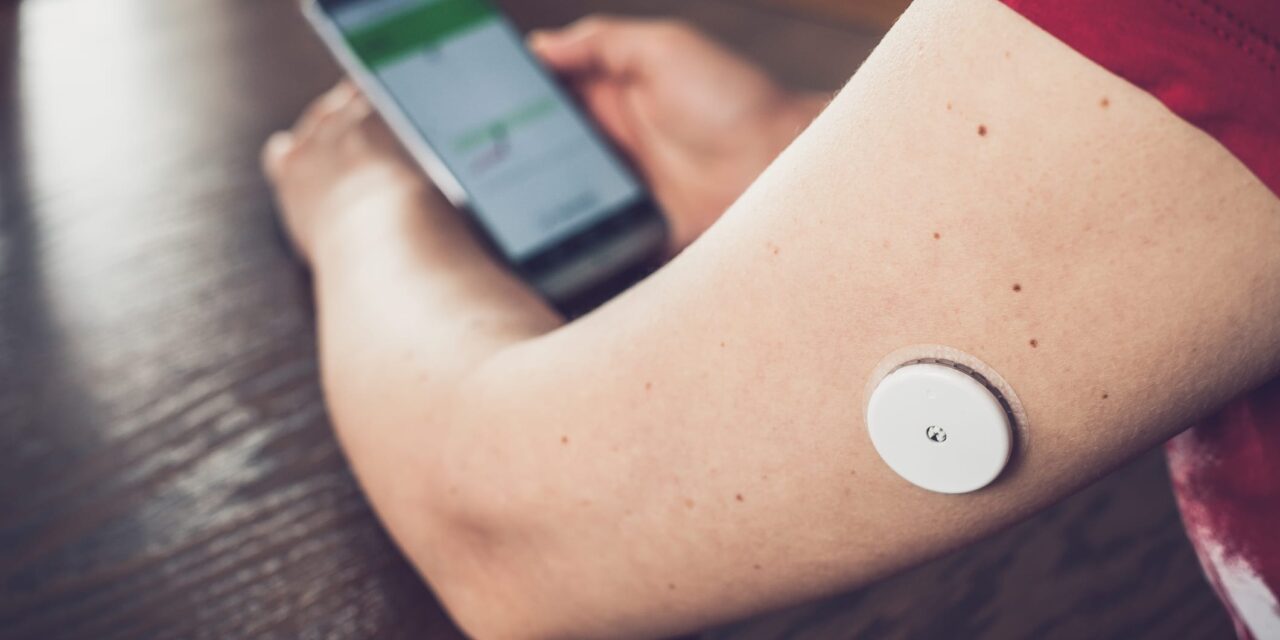
RPM breaks that assumption. A mid-sized health system might have several hundred devices in patients’ homes at any given time. This could include weight scales for heart failure patients, continuous glucose monitors for diabetics, pulse oximeters for post-surgical cases, and wearable ECG patches for cardiac monitoring. Each is subject to the same lifecycle management obligations as any bedside ICU monitor. The AAMI HTM Benchmarking Guide identifies inventory accuracy and maintenance compliance as foundational performance metrics for any medical equipment management program. Extending those metrics to a dispersed home fleet requires a fundamentally different operational model.
Key Operational and Technical Challenges
Provisioning and configuration
A cellular blood pressure monitor or CGM leaving the facility needs to be pre-configured, with network credentials loaded, software version confirmed, patient enrollment completed in the RPM platform, and a functional test run. Programs that skip these steps are likely to see higher drop-out rates in the first few weeks, when setup problems are most likely to surface.
Connectivity management
Home Wi-Fi environments are unpredictable. Router interference, ISP outages, and firewall configurations all affect data transmission. Cellular devices are more robust but introduce carrier coverage, SIM provisioning, and data plan dependencies that fall in an ill-defined space between IT and HTM. A 2024 infrastructure framework review in JMIR found that clinicians forced to log in to separate platforms to review RPM data experience significantly higher cognitive load and are less likely to act on alerts promptly, a workflow problem with direct implications for device management.
Cybersecurity
Home-deployed devices operate outside the hospital’s managed network on the patients’ personal internet infrastructure. Research in Biomedical Instrumentation & Technology notes that HTM teams are often inadequately trained in IT security and that responsibility boundaries with information security are poorly mapped in most organisations. Risks include data interception, firmware vulnerabilities, and the difficulty of enforcing encryption standards on hardware that’s physically controlled by the patient.
Sanitisation and refurbishment
A device returning from a home deployment requires disinfection, functional testing, battery assessment, firmware verification, and inventory reprocessing before re-issue. For programs managing hundreds of active units, that turnaround workflow requires dedicated HTM staffing or a contracted reverse logistics partner.
How Health Systems Are Building RPM Support Models
Systems that have run successful RPM programs share a common pattern: HTM was involved in the program design phase.
NYU Langone Health, which has enrolled over 11,000 patients in home-based monitoring since 2017, structured its RPM-hypertension workflow around five stages: enrollment, device setup, data monitoring, follow-up and discharge, with clear staff accountability at each transition. Device setup was treated as a clinical handoff, with structured support for patients who encountered connectivity or usability problems in the first 30 days.
Massachusetts General Hospital’s hospital-at-home experience, reviewed in JMIR in 2023, identified device modality selection as a key operational variable. The choice between ambient sensors, wearable patches, and intermittent-measurement devices affects the maintenance burden and return workflow complexity as much as clinical data quality.
The emerging model in larger systems involves a “distributed biomed” structure: a dedicated sub-team responsible for home device fleet management, with its own CMMS workflows, provisioning protocols, and SLA metrics. Fleet management platforms that integrate with the hospital’s existing CMMS are becoming a practical requirement at scale.
Before Expanding HTM’s Scope: What to Settle First
Not all RPM devices carry the same regulatory and maintenance obligations. A US Food and Drug Administration-cleared cellular blood pressure monitor sits in a different category than a consumer-grade smartwatch. HTM departments should establish, with clinical leadership, which devices require incoming inspection, PM scheduling, and CMMS tracking.
EHR integration depth should be assessed before device selection. A platform requiring manual data reconciliation or a separate clinical login adds cost to both HTM and clinical workflows. Evaluating API connectivity and HL7 FHIR compatibility upfront avoids the most common source of program-level friction.
RPM as a Care Delivery Redesign
The expansion of RPM is a care delivery redesign that creates a new category of HTM responsibility. Departments that engage early, shaping device selection, building provisioning and return workflows, contributing to cybersecurity governance, and establishing CMMS coverage for home-deployed assets will be better positioned to support programs that scale without compromising safety.
About the author: Lesley Barton is the National Clinical and Training Manager at Bunzl & AMHC, with over 40 years of healthcare experience. A registered nurse, midwife, and continence nurse specialist, she transitioned into healthcare sales and management, leading education in continence, wound care, and medical consumables. She serves as a board director at the Continence Foundation of Australia and founded the Clinical Care Connections program, playing a key role in developing Atlas McNeil Healthcare’s education and training initiatives to support best practices in clinical care.