
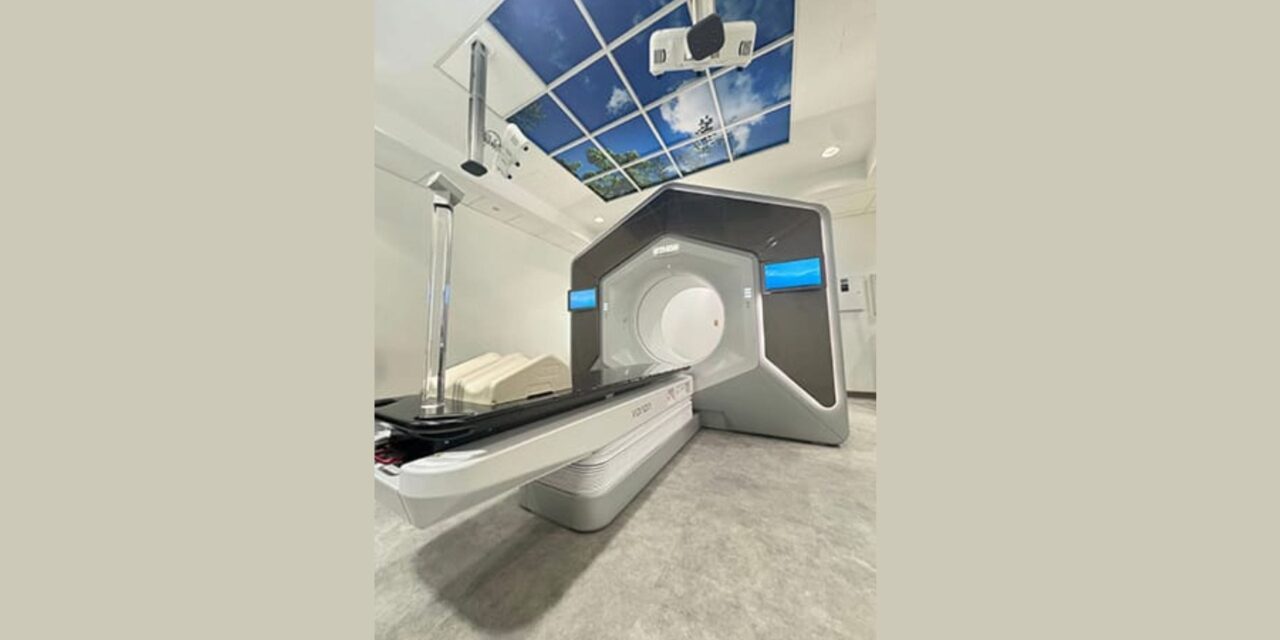
The center is among the first in the region to offer adaptive radiation therapy, which uses artificial intelligence to adjust treatment plans daily based on patient anatomy.
City of Hope Cancer Center Chicago is expanding its radiation oncology capabilities through the implementation of two technologies designed to improve precision, efficiency, and patient outcomes. The center is now using the Ethos therapy system and will begin using the Siemens Biograph mCT system to provide adaptive radiation therapy this summer.
The Ethos system integrates artificial intelligence-driven adaptive treatment with real-time imaging. Unlike conventional radiation therapy that relies on static scans taken before treatment begins, this technology allows the radiation oncology team to re-image and modify treatment plans before each session. This capability accounts for day-to-day anatomical changes, including organ movement and tumor response.
“City of Hope Chicago is leveraging AI-driven technology like our new Ethos linear accelerator to personalize cancer care so that clinicians are no longer locked into a single care plan,” says radiation oncologist Kevin King, MD, in a release. “We can re-image the patient and adapt treatment daily, allowing for precision radiation oncology.”
The Siemens Biograph mCT system, an advanced PET/CT platform, will be offered at the City of Hope Downtown Chicago clinic beginning in summer 2026. The system functions in a tri-modality capacity, serving as both a high-resolution PET/CT scanner and a radiation therapy CT simulator.
According to the center, the PET/CT platform maps the cancer before treatment, while the Ethos system adapts the radiation in real time. This integrated approach aims to minimize radiation exposure to healthy tissue, which may result in fewer side effects and improved quality of life for patients.
“Our approach is powerful because anatomy is dynamic. Organs move, and tumors can shrink over the course of therapy. We can now adjust in real time and deliver the most precise treatment plan possible for each patient, every single day,” says King, in a release.
The Biograph mCT system features a wide-bore design to accommodate patients with higher body mass index or claustrophobia. It also provides quantitative reproducibility for follow-up and radiation therapy planning. The technology is most effective for cancers that move or change frequently, such as prostate, pancreatic, and head and neck cancers, according to the press release.
By combining these imaging and treatment capabilities, City of Hope clinicians can provide more precise initial planning, accurate daily adaptations, and improved differentiation between tumors and normal tissue. The integration is intended to reduce radiation exposure to healthy organs and lower the risk of treatment-related toxicity.
Photo caption: Ethos system
Photo credit: City of Hope