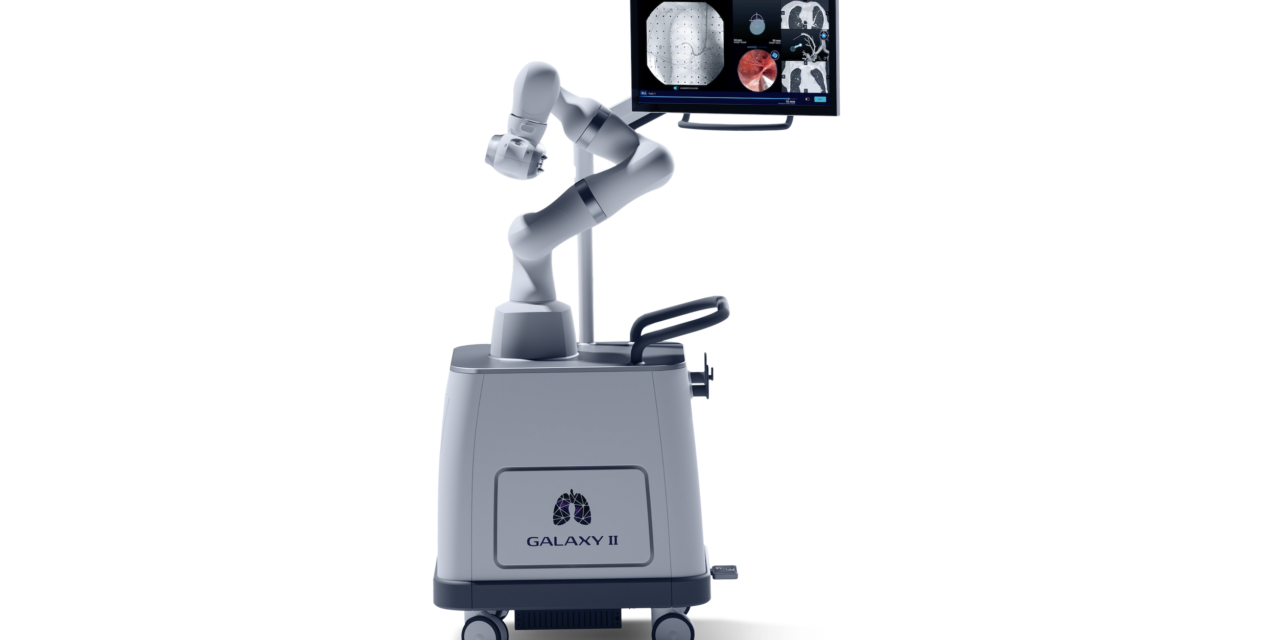
The hospital is the first in Kern County to implement Noah Medical’s Galaxy System for robotic-assisted bronchoscopy and lung nodule biopsy.
Adventist Health Bakersfield has become the first hospital in Kern County, California, to implement Noah Medical’s Galaxy System, expanding its lung nodule services with robotic-assisted bronchoscopy technology designed to help physicians navigate to and biopsy small lung nodules.
The system provides real-time navigation and visualization during bronchoscopy, allowing physicians to confirm their location within the lung before collecting a tissue sample. The technology is intended to improve access to small and peripheral lung nodules that can be difficult to reach using conventional bronchoscopy.
According to Adventist Health, a recent multicenter clinical study reported a 96.7% diagnostic yield with the Galaxy System. More than 15,000 procedures have been performed using the platform at more than 60 hospitals in the US.
Single-Use Bronchoscope and Imaging
The Galaxy System uses a single-use bronchoscope, eliminating the need to reprocess the scope between procedures and reducing the potential for cross-contamination. The platform also incorporates imaging technology designed to limit radiation exposure during procedures.
“Lung cancer is a devastating disease that impacts far too many individuals and families in our community,” says Ghassan Jamaleddine, MD, pulmonologist and medical officer at Adventist Health Central California Network, in a release. “Previous technology often made it difficult to accurately detect and locate small lesions in the lungs, but with the Galaxy System, we can streamline the entire process and offer a more precise and efficient approach to diagnosis and treatment.”
The Galaxy System is now in clinical use at Adventist Health Bakersfield by lung specialist Rajan Goyal, MD, and Kaiser Permanente physicians Amy Mehta, MD, Aung Htoo, MD, and Thu Yein, MD.
Photo caption: Galaxy System
Photo credit: Noah Medical