
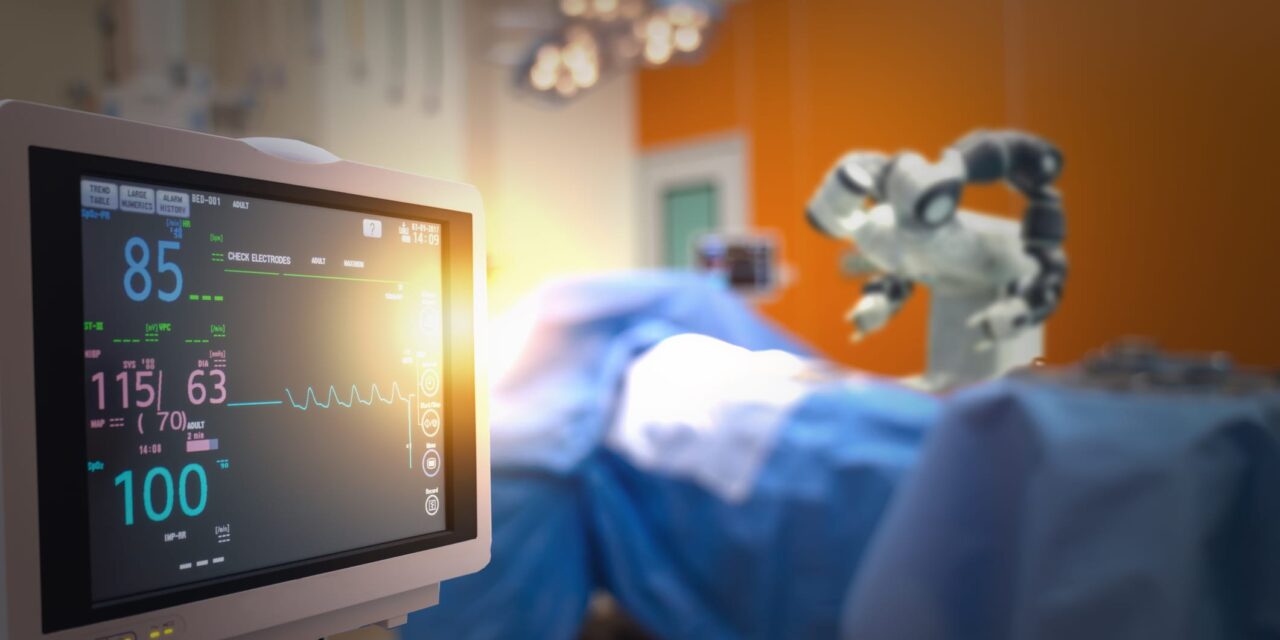
The FDA is seeking feedback on safety, cybersecurity, and oversight considerations for medical robots that operate autonomously or are controlled remotely.
The US Food and Drug Administration’s (FDA) Center for Devices and Radiological Health is asking manufacturers, providers, patients, and others to weigh in on how the agency should evaluate robotic medical devices with autonomous or remote teleoperation capabilities. The center released a discussion paper on the topic.
Feedback can be submitted under docket number FDA-2026-N-13135 on regulations.gov by Jan 5, 2027. The center will also hold a hybrid public workshop Dec 2-3, 2026, to discuss the topics covered in the paper. The FDA states that it is for discussion purposes only and does not represent draft or final guidance, propose policy changes, or communicate the agency’s regulatory expectations. Instead, it is meant to gather early input from outside the agency.
Where the Market Stands
Robotic devices with autonomous capabilities have been available in the US for years, but as of July 2026, no remotely teleoperated or fully autonomous robotic device systems have received marketing authorization, according to the FDA.
The paper’s scope extends beyond surgery. It covers robotic systems that perform diagnostic, therapeutic, or rehabilitative tasks on human anatomy, including robotically assisted surgical devices, stereotactic navigation systems, imaging devices, and endoluminal navigation devices. Users range from imaging technicians to surgeons.
FDA cites manufacturers developing remote ultrasound capabilities, exploring remote teleoperation of robotically assisted surgical devices, and pursuing autonomous peripheral blood draws and autonomous detection and control of life-threatening internal bleeding.
Defining Autonomy and Teleoperation
The agency is seeking comment on proposed definitions. It describes autonomy as a system’s ability to perform tasks and make decisions based on current state and sensing without user intervention. The paper distinguishes autonomy from automaticity, which it characterizes as predictable behavior that follows established rules or programming.
The FDA notes that no single, universally agreed-upon framework exists for levels of autonomy. The most widely adopted, proposed in 2017, defines six levels ranging from Level 0 (full surgeon control) to Level 5 (fully autonomous surgery with no user input). The paper also points to alternative frameworks, including one from the International Electrotechnical Commission, that offer more granular views of user-robot interaction but may be less practical as high-level grouping tools.
Remote teleoperation is defined as real-time remote access and control of a robotic system without the user being physically present in the room with the patient. The paper says this can range from remote performance of specific tasks to entire procedures.
Autonomy: Potential Benefits and Risks
The FDA says autonomy could improve consistency and repeatability, enhance procedural accuracy and workflow efficiency, reduce the cognitive and physical burden on users, and expand access to care by reducing the need for skilled providers. The agency also says artificial intelligence and machine learning could amplify these benefits by helping systems respond to complex or variable anatomy.
The risks, the paper says, may be new and distinct. These include incorrect autonomous execution, reduced user vigilance, and limited adaptability to variability within and between procedures. At higher levels of autonomy, device-generated errors could occur before a supervising user can meaningfully evaluate or interrupt them.
Human factors are also a concern. The FDA describes automation bias, in which users defer to the system over their own clinical judgment, and automation rejection, in which users override the system in favor of their own judgment. Both may erode independent oversight or hurt technical performance. The paper adds that some users may lack the expertise to complete a procedure manually if an autonomous system fails.
For AI-based systems, the agency flags unpredictable performance outside the scope of training data, variable performance across patient subgroups, limited transparency, and performance that may degrade over time.
Remote Teleoperation: Access Gains, Distance Risks
On the benefit side, remote teleoperation may extend specialized expertise to underserved or hard-to-reach areas, support remote mentoring and proctoring, and speed care for time-sensitive conditions such as ischemic stroke and myocardial infarction.
The risks may scale with the degree of separation between user and patient. They include managing intraprocedural adverse events, loss of connectivity, and the remote provider’s reduced sensory perception, such as the inability to sense changes in the pitch of a bone drill or tissue resistance. The paper says that loss of real-time imaging could lead to serious events such as vessel perforation or clot dislodgement.
The paper also notes a tension in mitigation strategy. Keeping local providers in the room is a straightforward safeguard, but it may not be feasible where the needed expertise is unavailable. Dedicating two specialists to one procedure could also reduce the overall availability of specialized care. In addition, locations that could gain the most from remote teleoperation may also be those that present the greatest risks because they lack on-site resources.
Combined Capabilities and Cybersecurity
When both capabilities are present, the FDA says new risks may arise, such as latency delaying user intervention if autonomous functions fail during remote operation, and unreliable handoffs of control between modes.
On cybersecurity, the paper notes that connected devices qualify as “cyber devices” under Section 524B of the FD&C Act. A breach could simultaneously compromise autonomous decision-making and remote user control. The paper lists network performance, system-level threats, integrity and non-repudiation, availability, and reliance on users among the key considerations. It also notes that a compromised video feed, for example, may not be apparent to a user at the patient’s bedside.
Risk Mitigation and Open Questions
Potential mitigations include system design, performance testing, labeling, training, verification and validation, user oversight, human factors engineering, and postmarket oversight. The paper says FDA is considering several approaches:
- Verification and validation through nonclinical methods, such as bench testing, in silico testing, and cadaver studies, as well as clinical studies, including worst-case conditions.
- Whether the in-room healthcare team needs training to perform manual overrides or initiate an emergency stop.
- Postmarket monitoring through real-world data and Medical Device Reporting to identify and correct issues with autonomous or remote functions.
The paper’s 15 discussion questions ask stakeholders about terminology, the evidence needed to characterize benefits and risks, how overall risk changes with the level of autonomy or remote teleoperation, expectations for emergency management and conversion to manual procedures, evidence of resilience to connectivity loss or cybersecurity breaches, and how postmarket activities could help.
In its conclusion, the FDA says it aims to develop a regulatory approach that mitigates risks while championing the benefits of these technologies.
ID 129638052 © Ekkasit919 | Dreamstime.com