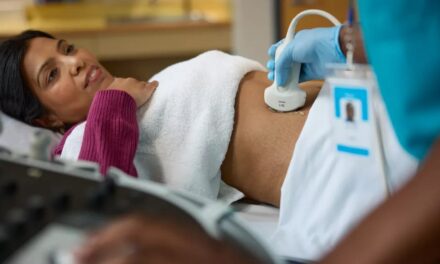

The updates include a new spleen exam workflow, compatibility with Apple laptops, and direct connection to electronic health records.
E-Scopics announced US Food and Drug Administration clearance for enhancements to its Hepatoscope platform, which include a new spleen assessment tool and expanded digital compatibility. The company will present these updates at the Digestive Disease Week 2026 exhibition in Chicago from June 3 to 5.
The platform now features a dedicated spleen exam workflow to assist in the non-invasive assessment of cirrhosis complications. This system uses specific acquisition parameters, such as adjusted vibration frequency and a region of interest tailored to the anatomy of the spleen, to improve the reliability of tissue stiffness measurements.
“Hepatoscope is unique because it combines real-time ultrasound imaging and transient elastography in a single, highly portable device,” says Dr Olivia Pietri, private practice hepato-gastroenterologist at Saint-Joseph Hospital in Marseille, France, in a release. “What is particularly compelling is the ability to assess spleen stiffness under direct image guidance at the bedside. This opens new possibilities for evaluating cirrhotic patients and managing them more proactively, while maintaining the reproducibility and ease of use clinicians need in everyday practice.”
The update also achieves compliance with the IEC 63412-1 international standard for mapping tissue stiffness. This standard requires specific visualization of heterogeneities across liver stiffness values, which may help clinicians better monitor treatment by identifying small changes in tissue.
“Elastography plays an essential role in evaluating the severity of chronic liver diseases by measuring how shear waves propagate through tissue such as the liver and spleen,” says Claude Cohen-Bacrie, founder and CEO of E-Scopics, in a release. “Hepatoscope is now the only ultraportable ultrasound system with both real-time ultrasound imaging plus tissue elasticity imaging, for liver and spleen assessment, at the point of care.”
In addition to clinical features, the software-based platform is now compatible with macOS systems using Apple M3 chips or later. This expands deployment options beyond the original Windows version, offering healthcare organizations more flexibility in diverse IT environments.
The system also introduces connectivity with electronic health record (EHR) systems through the HL7 FHIR R4 standard. This integration allows operators to access appointment schedules, select patients from institutional worklists, and automatically export exam reports to the EHR. These features are intended to reduce administrative tasks and increase exam throughput in clinical practice.