What’s Behind Inconsistent Sterile Processing?
New research examines the organizational factors that make it difficult for sterile processing teams to maintain consistent practices.

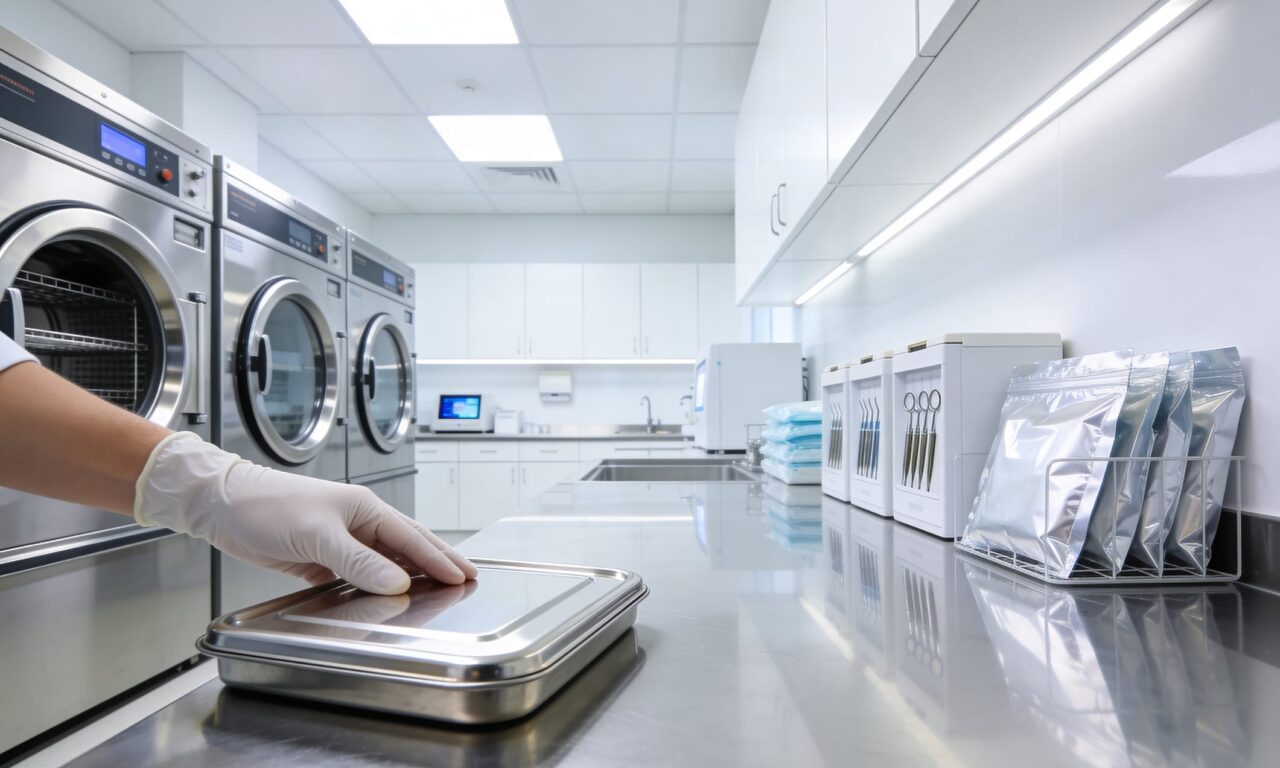
New research examines the organizational factors that make it difficult for sterile processing teams to maintain consistent practices.

AAMI has released guidance detailing best practices for sterile processing of dilators and ultrasound probes in healthcare settings.


Air regulators are investigating several medical equipment sterilization facilities for potential health risks caused by EtO emissions.


New research examines the organizational factors that make it difficult for sterile processing teams to maintain consistent practices.

Following reports of the public safety hazards of the industry standard— ethylene oxide—the U.S. FDA has newly approved chlorine dioxide gas for contract sterilization of medical devices.
Read More
The new integration enables biomedical engineers to respond more quickly to device safety issues in an era of COVID-19.
Read More
Researchers have developed a low-cost system that uses a portable solar energy collector to power an autoclave for sterilizing medical tools.
Read More
Englewood, Colo.-based UV-Concepts, Inc. announces the launch of the UV-C Enclosure, an automated no-touch UV-C enclosure designed to improve upon the existing standard of manual cleaning and disinfection of large portable medical equipment.
Read More
The U.S. FDA has alerted healthcare professionals, parents, and caregivers that there is a temporary shortage of a tracheostomy tube manufactured by Smiths Medical, the Bivona.
Read More
The FDA has announced steps to address potential medical device shortages due to the recent closure of a large sterilization facility in Illinois. Specifically, the agency is working to ensure that devices continue to be sterilized safely and that patients continue to have access to critical devices.
Read More