Kontakt.io Launches Hand Hygiene Module Compatible with Existing Hospital Dispensers
New module uses RTLS to prompt hand sanitization before patient contact without requiring infrastructure changes.


New module uses RTLS to prompt hand sanitization before patient contact without requiring infrastructure changes.

AAMI, along with the Parenteral Drug Association, is calling for abstracts for the 2025 Kilmer Conference themed “Next Generation Microbiological Quality and Sterility Assurance.” The event is set for February 3-6, 2025, in Orlando, Fla. Submissions on innovations in sterilization and microbiological quality are due by August 31, 2024.




Researchers developed a new, long-acting silver-ion releasing coating that prevents bacteria from adhering to implants and then kills them.


New module uses RTLS to prompt hand sanitization before patient contact without requiring infrastructure changes.
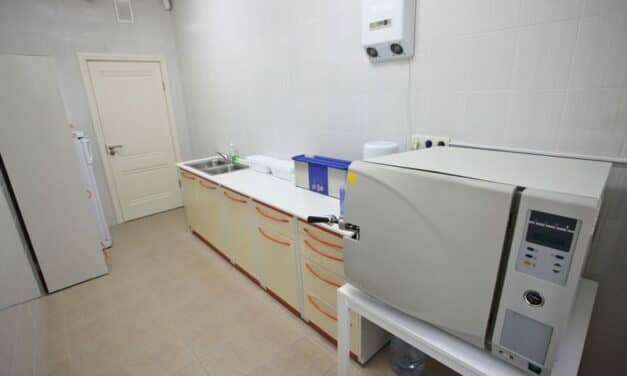
In times of COVID-19, the leading question in the healthcare industry is “what can be done to facilitate safe and clean sterile (CS) processing departments?”
Read More
Graphite nanoplatelets integrated into plastic medical surfaces can prevent infections, killing 99.99% of bacteria which try to attach—a viable solution to a problem which affects millions and costs huge amounts of time and money.
Read More
In an effort to improve patient safety and device durability, Mindray, a global developer of medical technology, has chosen to incorporate medical polymers produced by Eastman Chemical Company into its current generation of patient monitors.
Read More
Data show that a leakage as small as 0.22 ml can be detected by the system, which then alerts the medical team to inspect the IV site for an infiltration.
Read More
The American Hospital Association and the Centers for Disease Control and Prevention have published best practices on using the healthcare physical environment to prevent infections. The document, available as a free PDF download, contains guidance on the flow of patients, personnel, equipment, and waste, among other topics.
Read More
Preventing the spread of healthcare-acquired infections is compelling clinics, ambulatory surgical centers, and hospitals around the globe to purchase automated endoscope reprocessors.
Read More
Sylvia Garcia-Houchins, MBA, RN, CIC, has joined The Joint Commission as its new director of infection prevention and control in the Division of Healthcare Improvement. Garcia-Houchins is responsible for the oversight of infection prevention and control initiatives at The Joint Commission.

