After more than a decade of outsourcing, the cancer center transitioned its HTM program in-house to align technical service with its clinical mission.
By Alyx Arnett
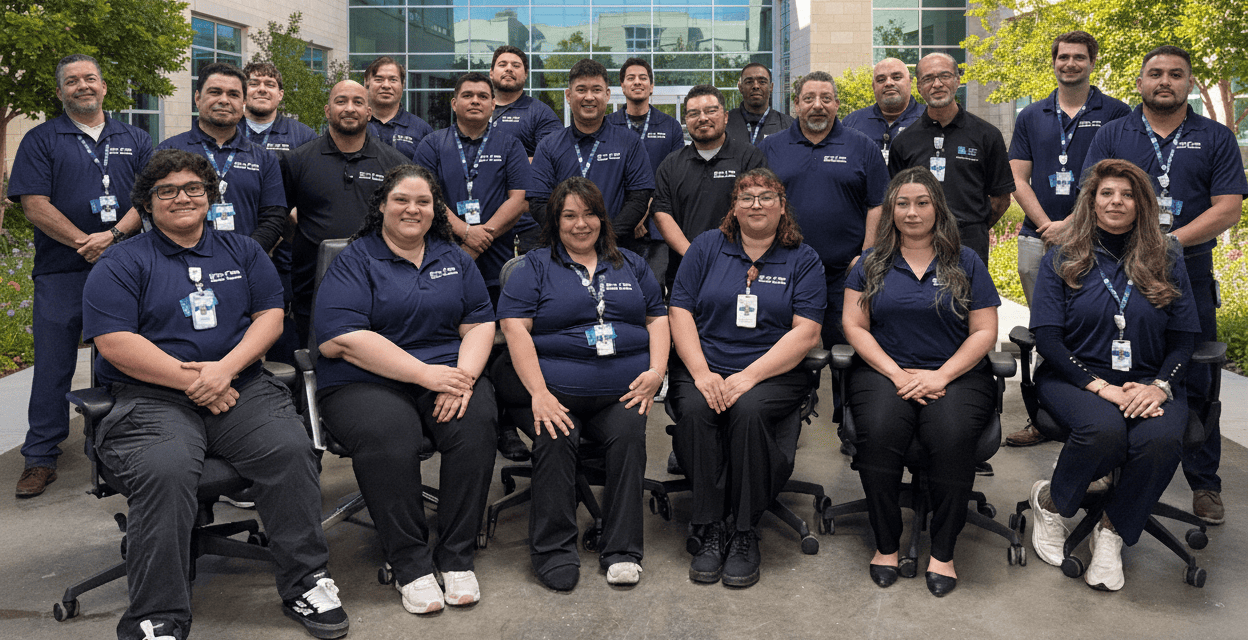
On Oct 1, 2025, City of Hope transitioned its biomedical engineering department from an outsourced model to a fully in-house program, ending more than a decade of third-party management.
Mike Ahmad, the system director for the biomedical engineering department who spearheaded the transition, saw an opportunity to better align technical services with the day-to-day needs of the high-acuity cancer institute that spans facilities in California, Chicago, Atlanta, and Phoenix and manages approximately 35,000 pieces of medical equipment, as well as unify biomedical operations that had been functioning independently across City of Hope’s sites.
Ahmad, who joined the organization in late 2024, says the move, while still early, is improving financial transparency, communication, and the biomed department’s visibility and value. “The spirit of the department, it’s totally different. They are more than willing to cover for each other and make sure that we are always in front of the patient, taking care of the equipment so the patient can be diagnosed or treated on time without any delays,” says Ahmad. “There is a huge change—mental change, performance change—for the best, and the level of satisfaction for the department employees is way up, as well as the customer satisfaction from the stakeholders and the end-users.”
Structuring the Business Case
Since bringing biomedical engineering in-house, Ahmad says City of Hope has gained clearer visibility into the true cost of equipment service and parts, along with greater control over how resources are allocated.
Ahmad says the in-house model has allowed the department to consolidate labor, parts, supplies, and overtime into a single operational structure, creating a more accurate picture of total service costs and enabling more informed budgeting and sourcing decisions.
“Before, the service provider was doing their job, but at the same token, the customer here wasn’t even having reviews with the vendor. All they knew is, ‘We pay this company X amount of money. This is the budget,’” Ahmad says. “But when I started, I’m like, ‘No, you have another five times this budget spent on parts and overtime and other things that’s not included in the agreement.’”
With those costs now under one umbrella, Ahmad says the biomed department can track spending at a more detailed level, prioritize component-level repairs when appropriate, and make strategic decisions about when to repair, refurbish, or replace equipment.
The shift has also given leadership clearer accountability for financial performance, equipment life-cycle management, and vendor selection, Ahmad says.
The Clinical Impact
Clinical departments are seeing more consistent support and fewer disruptions, according to Cera Salamone, director of perioperative services. Salamone says the in-house team now conducts proactive rounds and maintains regular communication with her department. As a result, her involvement in managing biomed-related issues has been reduced to what she describes as a 30-minute weekly touchpoint.
“Eighteen months ago, I was spending a minimum of eight hours a week, sometimes up to 20 hours a week, just calling and following up and trying to manage biomed for my department,” Salamone says.
With the in-house model, Carl Knowles, manager of biomedical engineering, worked to balance planned maintenance schedules, helping smooth workloads throughout the year and avoid the month-to-month surges that can strain staffing.
Salamone says the improvements are tied not only to responsiveness, but also to a shared understanding of the urgency of oncology care. “These people have cancer, and to them, ‘wait’ is a four-letter word,” Salamone says. “When you’re an employee here, you become an employee here because you are aligned with that mission.”
She says this alignment was demonstrated recently when a new building experienced damage to surgical instruments. While initial assumptions pointed to the equipment itself, the in-house biomed team instead hypothesized that the root cause was water quality. “They have been very proactive in working with consultants and overseeing the testing and managing that to get to the root cause of the problem,” she says. “They’re communicating that and looking for possible solutions, looking at how we can reprogram the equipment to run on only DI water, for example.”
Investing in the Workforce
Simon Tobias, a supervisor in biomedical engineering who has worked at the facility for 12 years, says the shift to an in-house biomedical engineering program has brought greater inclusion, stability, and opportunities for growth. He says technicians are now fully integrated into the organization and recognized as part of the broader care team.
“It did feel a little more like a stepchild when you went in. Now, you’re officially adopted, and you’re one of the family,” Tobias says.
The move has also provided a level of job security that is difficult to achieve under contract-based arrangements. “It’s no more worrying about contract renewals and are they going to keep us,” he says.
Beyond stability, the in-house model is expanding access to training and professional development. Knowles and Ahmad are working to build a voluntary training program designed to grow in-house repair capabilities, reduce reliance on manufacturer service contracts, and enable faster on-site troubleshooting.
“It’s a win-win all around,” Knowles says. “It also provides growth for the technicians. It increases morale. They want to stay here. They want to grow and learn more and expand their roles.”
Validation and Future Growth
Early results from the in-house model suggest strong compliance performance, Ahmad says. Shortly after the transition, City of Hope, Duarte, California, underwent an inspection by the Centers for Medicare & Medicaid Services. Surveyors reviewed the department’s files and found documentation and processes to be sound, validating the policies and procedures implemented during the transition.
Hospital leadership marked the outcome with a celebratory delivery of 100 cupcakes to the biomedical engineering department. Since November, biomed employees have also received 10 formal recognitions through the organization’s internal programs, including pins, certificates, and gift cards.
“They’ve been recognized, they’ve been acknowledged, and they’ve been rewarded,” Ahmad says.
Looking ahead, Ahmad plans to expand the in-house model to include imaging equipment, which has historically been managed separately. He envisions a team of seven to nine specialists managing imaging maintenance across the system, further consolidating technical operations.
For City of Hope, one of the most apparent benefits of the shift to in-house management is that biomedical engineering has become a more visible and integrated contributor to patient care.
“Now [stakeholders] know what biomedical engineering is. We are involved in everything—every meeting, whether it’s for technology assessments, for procurement, for brainstorming, for construction,” Ahmad says. “Now they know the value of biomedical engineering and why we are here and what value we bring to the table.”
Alyx Arnett is chief editor of 24×7 Magazine. Want to have your department profiled? Email [email protected].