
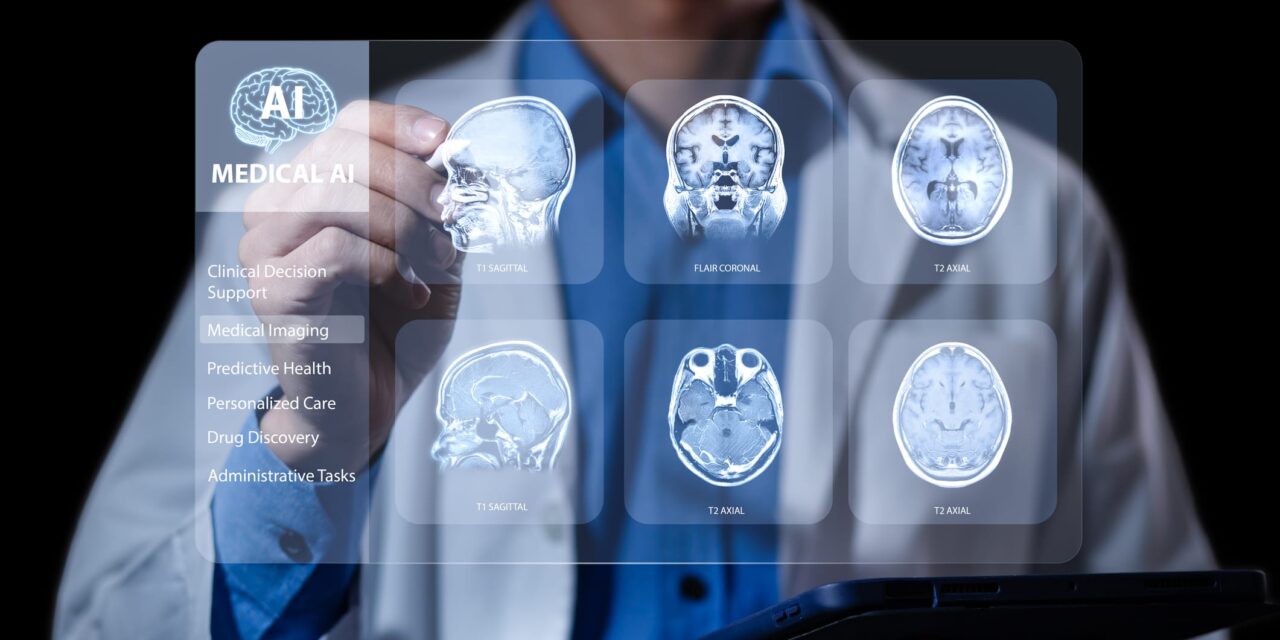
FDA-authorized AI medical devices remain heavily concentrated in a handful of specialties despite rapid growth in the number of authorizations, according to a new analysis.
Radiology accounted for 76.5% of the 1,430 artificial intelligence (AI) and machine learning-enabled medical device authorization records reviewed by the US Food and Drug Administration (FDA) from September 1995 through December 2025, according to a peer-reviewed study published in Cureus.
The analysis, led by Pouyan Golshani, MD, founder of physician-founded software and research company GigHz, and Mary S. Joseph, examined entries in the FDA’s public AI-enabled device list. Radiology accounted for 1,094 records, while the Radiology, Cardiovascular, and Neurology panels together represented 90.6% of all authorizations.
“Radiology already had digital images, common file standards and systems that move scans to the person reading them,” says Golshani, an interventional radiologist and the study’s lead author, in a release. “That gives developers somewhere to put AI. It doesn’t tell us that radiology is easy or that a radiologist’s job is close to being automated.”
Rapid Growth and Market Concentration
The authors reported 331 authorizations in 2025 alone. Annual authorizations averaged 1.8 per year from 1995 through 2014, climbing to 264 per year from 2023 through 2025.
The developer landscape remains fragmented. Of 740 companies with authorized AI devices, 502 (67.8%) had a single authorized device, while 13 companies (1.8%) accounted for 247 devices (17.3%).
Specialty representation outside the top three panels was limited. Across the full study period, pathology accounted for nine records, microbiology for six, and obstetrics and gynecology for four. No authorizations were recorded under a psychiatry or behavioral health review panel. The authors note these are FDA review-panel categories and do not map directly to every specialty or clinical setting in which a device may be used.
The Care-Delivery Gap
Golshani attributes radiology’s dominance in part to its established digital infrastructure, though the study describes authorization patterns rather than testing what caused them.
“There are plenty of guideline-based decisions in internal medicine where better support could help,” says Golshani in a release. “But the relevant information may be spread across notes, lab results, medications and prior visits. The challenge is getting the right information into the decision while the doctor can still use it.”
For developers and health systems, Golshani argues, that means defining a specific clinical task, making the necessary data accessible, and testing the tool in the workflow where it will be used. A documentation tool and a system recommending treatment require different evidence and safeguards, he says.
“Fear of being replaced and fear of missing out can both lead to bad decisions,” says Golshani in a release. “We need to ask what the tool actually improves, where it fails, and who is responsible when it does. I want us to keep building and test honestly. Delaying something useful has a cost, too.”
The analysis measures authorization records, not clinical adoption, patient benefit, or physician replacement. The FDA states that its AI-enabled device list is not comprehensive and does not capture the full range of healthcare AI, including software functions outside device regulation. A small number of records under a review panel does not establish that the corresponding specialty lacks AI tools.
ID 417249318 © S. Singha | Dreamstime.com