
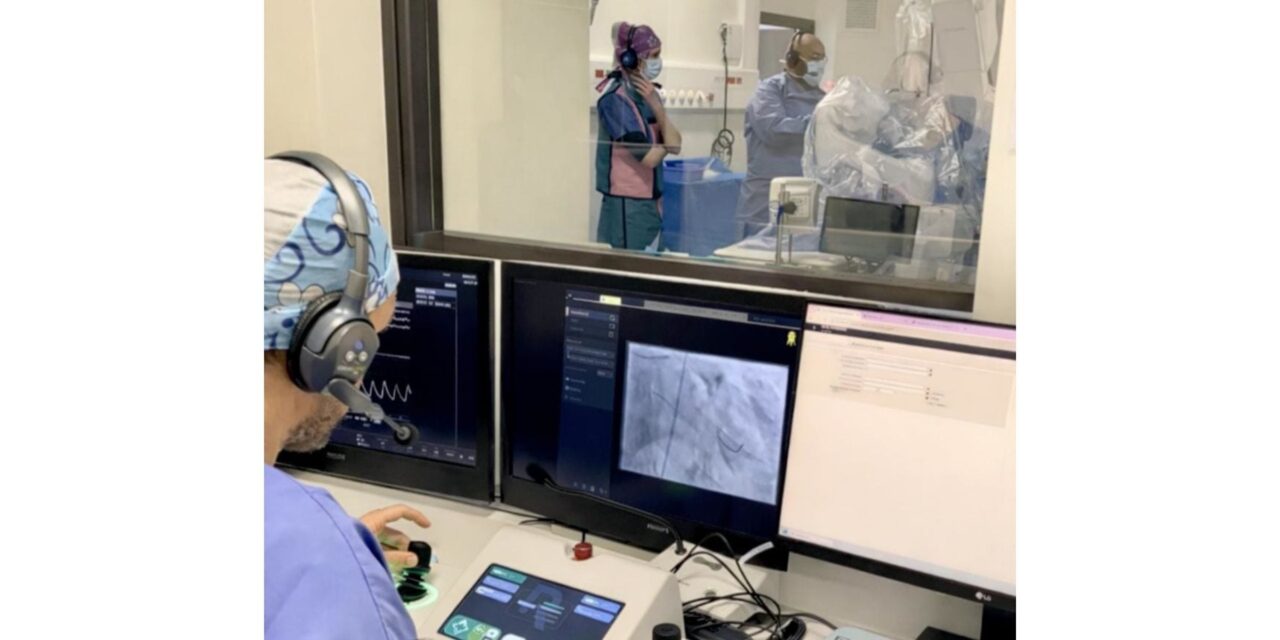
The study will evaluate a second-generation robotic platform in complex catheterization lab procedures.
Robocath, specializing in robotic solutions for interventional cardiology, announced the start of a first-in-human clinical study evaluating its new robotic system in coronary artery disease.
This second-generation robot, developed from the clinical and technological experience Robocath gained with its first robotic platform, which is deployed in numerous centers, integrates capabilities designed to meet the increasing demands of complex coronary procedures, according to a release from the company.
The study will recruit 20 patients with coronary artery disease, primarily complex cases representative of routine catheterization laboratory activity. It will be conducted at the Centre Cardiologique du Nord in Saint-Denis, France, under the leadership of Dr Mohammed Nejjari, principal investigator, and Dr Franck Digne, co-investigator.
The study will also involve members of Robocath’s Medical Advisory Board, including Dr Michael Haude and Dr Jean Fajadet, who will provide clinical and scientific expertise throughout the program.
“The launch of this first-in-human study represents a major milestone for Robocath. With our second-generation robot, we are leveraging the strong clinical and industrial experience acquired with our first platform, now in use internationally. This world-first illustrates our leadership position and our commitment to continuing to push the boundaries of interventional robotic technology,” says Philippe Bencteux, president of Robocath, in a release.
The global vascular interventional robot market was valued at $61.1 million in 2024. The market is projected to grow from $78.3 million in 2025 to $297 million by 2031, exhibiting a CAGR of 26% during the forecast period. The market growth is driven by increasing demand for minimally invasive surgeries, technological advancements in robotic systems, and the rising prevalence of cardiovascular diseases. Furthermore, growing healthcare expenditure and adoption of AI-powered surgical solutions are accelerating market expansion, according to a release from the company.
Photo caption: Robocath used in coronary artery disease treatment
Photo credit: Robocath