Siemens Healthineers Awarded $31 Million for Stroke Treatment Robotics
The funding from the Advanced Research Projects Agency for Health will support the development of autonomous technology for mechanical thrombectomy.


The funding from the Advanced Research Projects Agency for Health will support the development of autonomous technology for mechanical thrombectomy.

The program offers FDA-cleared, remanufactured instruments for da Vinci systems, aiming to reduce procurement costs and environmental waste.



Microbot Medical has submitted a 510(k) notification for Liberty, its single-use robotic system for endovascular procedures.


The funding from the Advanced Research Projects Agency for Health will support the development of autonomous technology for mechanical thrombectomy.

Zeta Surgical’s Zeta Cranial Navigation System received Special 510(k) clearance from the FDA for expanded functionality.
Read More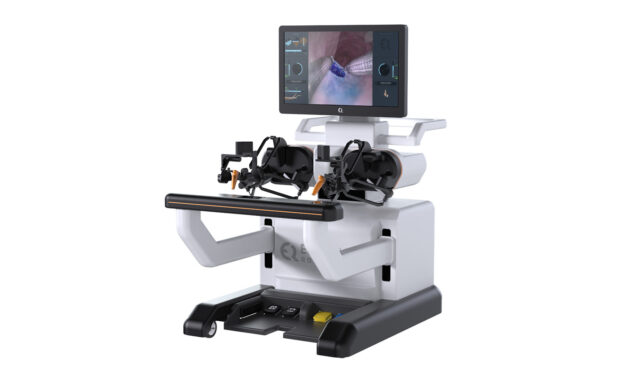
EndoQuest Robotics’ Flexible Robotic System has been accepted into the U.S. FDA’s Safer Technologies Program (STeP), allowing for a streamlined development process aimed at enhancing medical treatment safety. The company plans to collaborate further to advance its endoluminal robotic system for minimally invasive surgery.
Read More
The FDA created a new medical device category covering UV devices to microbial reduction, requiring authorization before coming to market.
Read More
Insight Medbotics has received U.S. FDA 510(k) clearance for its MRI-compatible IGAR robot for breast biopsy indications.
Read More
The FDA has cleared Zeta Surgical’s Zeta Cranial Navigation System mixed reality surgical navigation system.
Read More
Admetsys announced that the FDA has designated its automated glucose control and continuous blood diagnostics system a Breakthrough Device.
Read More

Xenex was granted De Novo FDA authorization for the LightStrike+ device, a high-intensity, broad-spectrum UV light robot.


