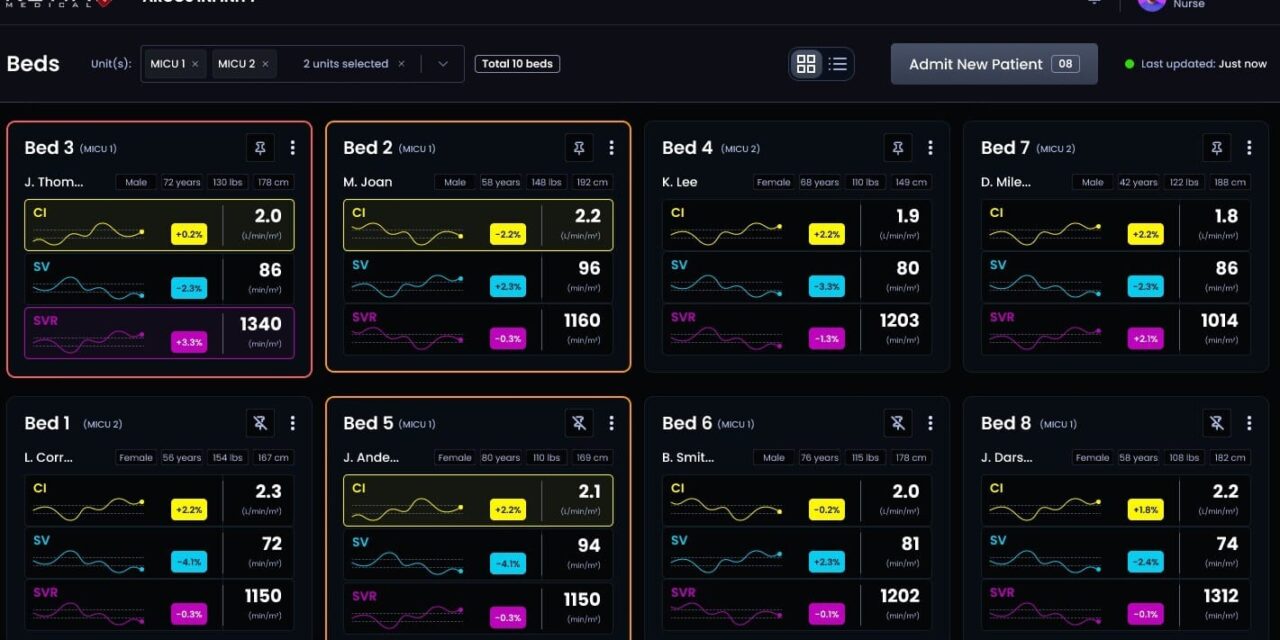
Argos Infinity analyzes existing physiologic data streams to provide early detection of hemodynamic instability without requiring new bedside hardware.
The US Food and Drug Administration (FDA) has granted 510(k) clearance for Argos Infinity, a cardiovascular intelligence software platform from Retia Medical designed to monitor high-risk patients in surgical and critical care environments.
The software analyzes real-time physiologic data from existing monitoring and tele-ICU systems, converting routine signals into cardiovascular insights to support earlier recognition of hemodynamic instability in operating rooms and intensive care units.
The technology addresses a clinical challenge where high-risk patients often begin deteriorating before changes appear in standard vital signs, according to a release from Retia Medical. In cardiac surgery patients, nearly 70% of low cardiac index time occurs while blood pressure remains normal, according to Retia Medical. Delayed recognition can lead to ICU escalation and organ injury, including acute kidney injury.
“In high-risk patients, deterioration can begin before traditional vital signs clearly reflect it,” says Chiedozie Udeh, MD, professor of anesthesiology and medical director at Cleveland Clinic eHospital, in a release. “By analyzing the monitoring data we already collect, Argos Infinity expands visibility into patients’ cardiovascular status across surgical settings and critical care units without requiring additional bedside hardware.”
Software Builds on Validated Algorithm
Argos Infinity uses Retia’s Multi-Beat Analysis algorithm, which the company says has been validated in 14 peer-reviewed clinical publications and shown to perform reliably in complex conditions including arrhythmia, low cardiac output states, and unstable blood pressure.
The software has been deployed under IRB approval across more than 400 beds in multi-hospital tele-ICU environments, operating on top of existing digital monitoring platforms. With FDA clearance, Retia can now expand commercial deployment.
“FDA clearance of Argos Infinity marks an important step in extending reliable cardiovascular insight beyond individual devices and into the broader digital care environment,” says Marc Zemel, chief executive officer of Retia Medical, in a release. “Hospitals already collect vast amounts of physiologic data. Infinity analyzes those existing data streams to deliver consistent hemodynamic intelligence across operating rooms and intensive care units, without requiring replacement of current monitoring infrastructure.”
Reimbursement Implications
The timing coincides with new CMS quality measures. Beginning with the 2026 reporting period, acute kidney injury is included as a hospital harm measure tied to reimbursement under CMS quality programs and will affect reimbursement in 2027.
Argos Infinity complements Retia’s Argos Cardiac Output Monitor, extending the same patented algorithmic foundation from bedside monitoring to health system-wide deployment. In the US, the Argos monitor is distributed by Medtronic.
Photo caption: Argos Infinity software
Photo credit: Retia Medical


