
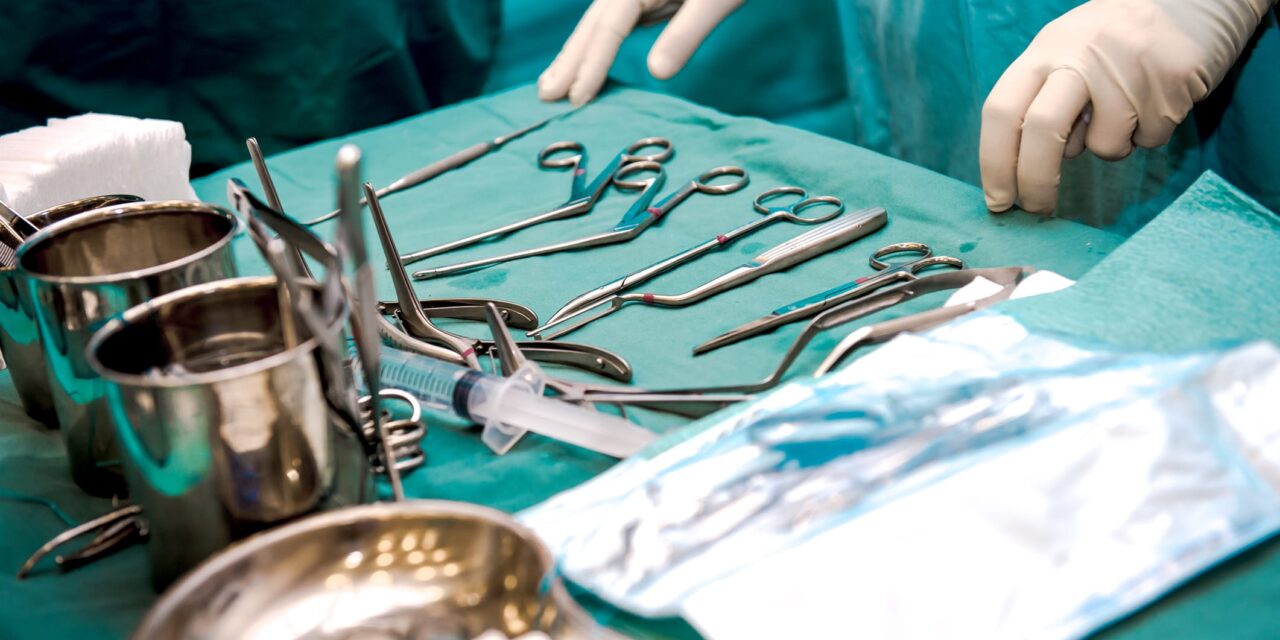
With limited guidance on how to validate end-of-life processing, a new study proposes a practical protocol using 100 simulated use-and-processing cycles.
Interview by Alyx Arnett
Reusable medical devices are designed to withstand repeated cleaning and sterilization—but determining when those devices truly reach the end of their usable life isn’t always straightforward.
A recent study proposes a framework for evaluating end-of-life (EOL) performance by running reusable devices through 100 simulated cycles of use, soiling, cleaning, and sterilization. The goal was to develop a practical, reproducible protocol for evaluating when reusable devices reach the end of their usable life.
“Current standards and manufacturer guidance provide insufficient clarity on how long reusable devices can be safely employed before posing risks to patients,” says Alpa Patel, MS, director of lab operations, healthcare reprocessing, at Nelson Labs in Salt Lake City, Utah, and lead author of the study.
In this research Q&A, Patel explains how the 100-cycle testing protocol was developed, what the study revealed about contamination risks, and what the findings could mean for healthcare technology management (HTM) professionals.
Read the article, “Assessing the impact of end-of-life processing on reusable medical devices,” in Biomedical Instrumentation & Technology.

Q: What motivated you to study EOL processing requirements?
A: Regulatory frameworks governing EOL processing differ significantly across regions, creating uncertainty for manufacturers and complicating compliance strategies. These gaps and inconsistencies motivated me to initiate a study aimed at fostering dialogue on EOL requirements and generating insights to support both manufacturers and regulatory bodies in addressing these challenges.
Q: What were the biggest ambiguities you encountered when developing your protocol?
A: One of the most significant ambiguities I encountered during protocol development was defining the worst-case scenario for EOL. Determining the appropriate number of cycles to accurately represent the use of a reusable device proved challenging.
Key considerations included how material properties, the extent and type of soiling, and the complexity of processing steps would influence device performance over repeated use. The central question was whether these factors could be modeled in a way that truly reflects real-world conditions and ensures the protocol remains both rigorous and representative.
Q: Your study used a theoretical estimate of 100 use-and-processing cycles. How did you determine that 100 cycles reflects a realistic service life in clinical settings?
A: One of the primary reasons for selecting 100 cycles was to generate a dataset that would be statistically representative of the device’s performance over a shortened service life. EOL evaluations are commonly structured around incremental cycle counts (eg, 0, 25, 50, 75, 100) and may extend to higher thresholds such as 200 cycles. By choosing the midpoint of this range, I aimed to assess whether the 100-cycle threshold meaningfully impacts device integrity and to determine if degradation trends observed at this stage could serve as an early indicator of long-term performance.
Q: Can you walk us through your simulated 100-cycle protocol?
A: In developing a protocol to simulate 100 cycles of reusability, the first priority was to define conditions that would represent both worst-case scenarios and actual clinical practices. For soiling, a blood-based test soil was selected to reflect critical procedures, and devices were uniformly sprayed to ensure consistent coverage under challenging conditions.
Cleaning processes were designed to maximize stress on the device, incorporating chemical exposure, elevated temperatures, and mechanical force. An automated cleaning method with pre-rinsing steps was chosen to represent a worst-case approach while maintaining alignment with standard practices. For sterilization, a US Food and Drug Administration-cleared steam pre-vacuum cycle was employed to ensure regulatory compliance and clinical relevance.
Collectively, these processes were selected to replicate real-world conditions encountered in healthcare settings, providing a rigorous and representative assessment of device performance throughout its reusable life span.
Q: Were there any surprising findings?
A: Unexpected findings emerged during both the biological and chemical residual analyses. Devices were systematically evaluated every 10 cycles, with testing performed for protein, total organic carbon, and cytotoxicity. Remarkably, the results demonstrated that no accumulation of biological or chemical residues occurred that could compromise patient safety. Performance at cycle 0 was equivalent to that observed at cycle 100, confirming that repeated use and processing did not introduce measurable risk.
Q: What do you see as the key implications of your results for HTM professionals responsible for tracking device lifecycles and advising on replacement timing?
A: The study evaluated seven coupons composed of different materials representative of reusable medical devices, along with one set of worst-case critical devices. Based on the data collected, the impact of biological or chemical contaminants was determined to be negligible, supporting the industry’s current definition of EOL. While it is acknowledged that laboratory conditions cannot fully replicate the complexities of a clinical environment, the analytical testing of the processing steps alone demonstrated acceptable results.
During repeated cycling, however, physical changes were observed: rust formation on certain devices, peeling of finishes on coupons, and general material deterioration. These findings highlight the importance of visual inspection as a primary method for assessing device EOL. Visual inspection serves as the first line of defense in ensuring patient safety, as it allows for the timely identification of surface degradation and other signs of compromised integrity.
Q: Which parts of your proposed EOL protocol do you see as most important to replicate to ensure reliable testing?
A: The protocol elements that could have the greatest impact on EOL assessments, and which manufacturers should carefully consider, include the incorporation of a soiling procedure into the test device. This addition would more accurately simulate clinical use, as exposure to blood and bodily fluids over time can contribute to material degradation and corrosion.
EOL testing should be conducted in a manner that accurately reflects how a device is used in a clinical setting. Each cycle should encompass patient use (including soiling), followed by cleaning and sterilization, to ensure the evaluation mirrors real-world conditions. Current recommendations do not clearly define this process, resulting in variability in how EOL assessments are performed across the industry. Establishing standardized protocols that incorporate these critical steps would strengthen the reliability of EOL determinations and enhance patient safety.
Another important consideration is conducting testing in incremental sessions to determine the point at which biological or chemical accumulation begins to occur. Intermittent evaluation throughout the EOL testing process provides valuable insight into the product’s durability and helps gauge the integrity of its life cycle. Such measures strengthen the reliability of EOL determinations and enhance patient safety by ensuring devices are assessed under conditions that closely reflect real-world use.
ID 28089882 © Amoklv | Dreamstime.com


This is an important topic and I am happy to see someone is finally testing the limit of processing cycles. Just wish the fundamental difference between various types of medical devices and processing are clearly defined. Most reusable medical devices that are deemed “assets” (aka medical equipment) are designed to withstand almost infinite cycles of cleaning and disinfection (but not sterilization). On the other hand, many devices not deemed “assets” have limited lifespan and processing cycles due to the challenges of sterilization needed for reuse. Finally, there are many single use or single patient use devices that were original not designed for reprocessing can be process safely.