
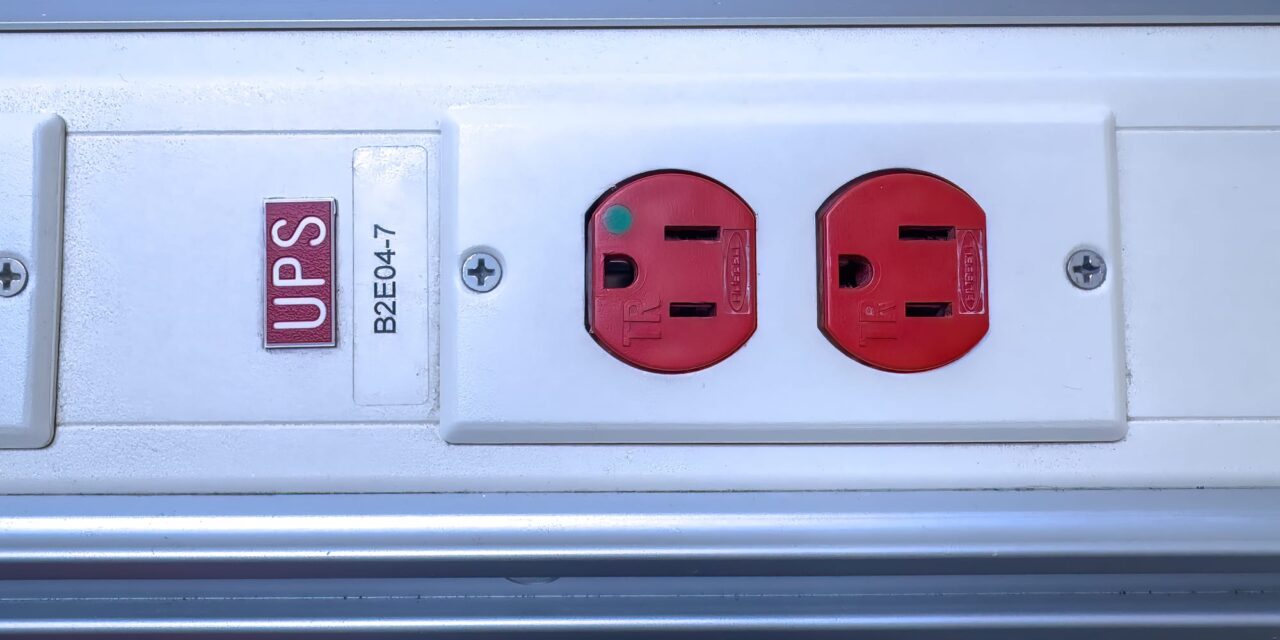
It’s been more than a decade since the requirement for routine electrical safety testing was removed, but HTM leaders say the habit refuses to die.
By Alyx Arnett
For decades, routine electrical safety testing of medical devices was considered a bedrock of patient protection in United States hospitals. But a shift that started more than a decade ago has upended that logic.
In 2012, the National Fire Protection Association (NFPA) rewrote NFPA 99, the Health Care Facilities Code, to remove the requirement for routine electrical safety testing. Since then, the consensus among many healthcare technology management (HTM) leaders is that routine electrical safety testing is largely unnecessary and a costly diversion from real risk.
“I’ll just be blunt; it’s a waste of time to do most routine electrical safety testing. There are much higher-value things that our techs could be working on,” says clinical engineer Matthew Baretich, PE, PhD, president of Baretich Engineering and author of AAMI’s Electrical Safety Manual 2015. Despite the updated code, Baretich says the majority of hospital HTM departments still perform hundreds or thousands of routine electrical safety checks each year.
Binseng Wang, ScD, CCE, fAIMBE, FACCE, principal consultant at BSI – Health Technology Consulting, says the persistence of routine electrical safety testing wastes scarce HTM resources, doesn’t improve patient outcomes, and is out of step with contemporary evidence on equipment safety and failure modes. “This has been clear for years, so there’s absolutely no reason to continue to do this,” he says.
A 1970s Problem in a 2025 World
To understand why routine electrical safety testing became ingrained in HTM, Stephen Grimes, FACCE, FHIMSS, FAIMBE, AAMIF, managing partner and principal consultant at Strategic Healthcare Technology Associates, points to the origin. In 1971, consumer advocate Ralph Nader published an article in Ladies’ Home Journal, claiming that as many as 1,200 patients were dying each year from electrical microshocks in hospitals.1
The concern stemmed from early animal studies suggesting that very small currents could trigger ventricular fibrillation if they reached cardiac tissue, raising concerns about “electrically susceptible” patients—those with saline-filled catheters, pacing leads, or other direct conductive pathways to the heart that might bypass the skin’s normal resistance.2 But investigations in the years that followed failed to validate the claims.2,3
Still, the alarm had a lasting impact. Congressional interest, emerging codes, and accrediting-body expectations—including The Joint Commission’s once-required quarterly electrical safety checks—cemented electrical safety testing as routine practice. Those requirements essentially gave rise to the biomedical technician profession,4 but they also locked HTM programs into focusing on the wrong risks. “They didn’t say you had to make sure the equipment was working properly. They didn’t say that you had to make sure it was delivering the right therapy or effectively diagnosing the patient,” Grimes says.
Meanwhile, the actual risk environment was changing. The US Food and Drug Administration added medical devices to its regulatory portfolio in 1976,5 and device design improved, incorporating double insulation and isolation features, says Grimes. International standards also converged on modern electrical safety principles—expressed globally through IEC 60601-1 and, in the United States, through ANSI/AAMI ES60601-1. Over time, national codes followed suit. NFPA 99 ultimately eliminated the requirement for routine electrical safety testing, limiting it to pre-service checks and post-repair situations.6
Why the Habit Persists
Despite this evolution, practice hasn’t shifted at the same pace. If the evidence and the standards are aligned, why are so many teams still running routine electrical safety test programs? “Tradition” is the most common explanation Wang hears. “We always did it,” he says, is a familiar refrain. Manufacturer recommendations are another. Some device makers and test-equipment vendors still publish and promote annual electrical safety checks, says Wang. Additionally, Grimes notes that, in some states, health department inspectors may still expect routine electrical safety tests, often because they are working from older standards.
There’s also the human reality of workload and metrics. Grimes says managers and technicians sometimes view routine electrical safety testing as an easy way to show productivity. “People get to justify their jobs by doing something fairly simple, and it makes people feel good, which it really shouldn’t,” he says. If testing rarely finds an out-of-spec device, that should not be a comfort, he says—it should be a sign to reallocate time.
Evidence Beats Ritual
None of the stakeholders argue that electrical safety is irrelevant. But Wang says routine testing should not continue simply out of habit. During a presentation in Germany in November 2025, he addressed the fact that some countries, including Germany, still mandate routine electrical safety testing. One of his goals in speaking there was to help regulators and HTM leaders rethink that mandate.
He says some countries, like Switzerland, “are already starting to make inroads.” While electrical safety testing is still required there, “they can do as often as every three years,” Wang says. His message abroad echoes the one he shares in the United States: HTM work should be guided by evidence about what actually fails and what impacts patient care.
Grimes says electrical safety should be reframed through a risk-assessment lens. “What I’ve tried to do, and many of us in the field who are aware of the issue have been trying to do, is get people to look at what the real risks are when there are issues,” he says.
Grimes recommends reviewing corrective work orders and failure codes to identify the most common and consequential issues. If grounding failures appear in certain device classes due to damaged cords or plugs, incorporate targeted checks into those PMs or user inspections. If a device family shows drift in a performance parameter, consider adding a periodic functional test. If a common failure is simply an overused battery on a noncritical device, a run-to-failure approach may be appropriate, Grimes says.
A review of service histories, he says, likely shows that most failures are either use-related or spontaneous. While some spontaneous failures can’t be predicted, Grimes says they can be planned for. He says facilities should ensure they have backups, prioritize getting reliable replacement equipment, and build equipment-replacement strategies for aging systems.
“Electrical safety still needs to be considered,” Grimes says, “but one needs to look at it from the standpoint of where the real risks are. We all have limited resources. Where do we focus those limited resources to have the greatest effect?”
The Human Factor, the Uptime Imperative, and Cyber Risk
Stakeholders say HTM should focus its resources on the risks that most directly affect patient care. They point to several key areas:
Human factors and device use
Grimes says the biggest gains often come from addressing how devices are used. “Are the clinicians, the operators of the device, using it properly? Do they understand?” he says. Strengthening operator training and routine user checks can reduce no-problem-found calls, uncover design-related user errors, and simplify day-to-day workflows, he says.
Reliability and uptime
Wang emphasizes focusing on improving equipment availability. As downtime stalls patient diagnoses and treatment, he argues that time is better spent on tasks aimed at improving reliability and uptime, such as preparing for known wear-and-tear issues, planning for unexpected failures, and replacing models that repeatedly fail.
Cybersecurity
Modern devices are connected and software-driven, making cybersecurity inseparable from safety. “There are other major and growing risks. Cybersecurity is one big example,” Grimes says. Wang adds that IT alone cannot manage medical device cyber risk because “medical devices are not simply computers.” HTM’s role includes supporting patching, evaluating risks, and helping design secure configurations.
How to Make the Shift
Moving away from routine electrical safety testing is as much a change-management effort as a technical one. Baretich says the first step is to align policy and practice with NFPA 99 and revise maintenance policies to state when electrical safety testing will be performed.
From there, Grimes and Baretich emphasize developing a risk-based plan grounded in failure history. Additionally, communication is essential. Clinicians and leaders accustomed to seeing large volumes of electrical safety testing may equate it with safety. Explain the standard, the rationale, and the safeguards. Highlight how reclaimed time will be rerouted to high-impact areas.
As policies change, monitor outcomes. If failure rates increase in an asset class after a change, Baretich says to analyze and adjust.
The Road Ahead
In an era of constrained staffing, rising device counts, and surging cyber threats, the choice is not whether to work harder, Wang says, but whether to work smarter. “We need people to do things more than they used to do, but we don’t have more people. So we have to divert their attention from doing less meaningful things to more meaningful things,” he says.
Baretich returns to a simple, practical message. “We should move on and use our human resources on more important patient safety issues.” For him, the case is closed on whether routine safety testing is needed. “I’m convinced. I don’t need any more evidence,” he says.
References
- Nader R. Ralph Nader’s most shocking expose. Ladies’ Home Journal. 1971;88:98+.
- Baretich M. Electrical Safety Manual. 2015 ed. Arlington, VA: Association for the Advancement of Medical Instrumentation; 2015.
- Bruner JMR, Leonard PF. Electricity, Safety, and the Patient. Chicago, IL: Year Book Medical Publishers; 1989.
- Braeutigam D, Dreps D, Ferguson K, Hyndman B, Shepherd M. The legacy of the CE and BMET: safer healthcare technologies. Biomed Instrum Technol. 2006;40(5):357-64.
- US Food and Drug Administration. A history of medical device regulation & oversight in the United States. Accessed 2025 Dec 11. Available at https://www.fda.gov/medical-devices/overview-device-regulation/history-medical-device-regulation-oversight-united-states
- National Fire Protection Association. NFPA 99: Health Care Facilities Code. 2012 ed.
ID 377091388 © Oasisamuel | Dreamstime.com
Alyx Arnett is chief editor of 24×7. Questions or comments? Email [email protected]


I agree with Matt, we do not need to EST most current electronics. Solid state is a different ballgame all together. I was looking for a mention of straddling the NFPA by CMS. Seems they have picked some things from the 2012 update but left others from 99, EST is one of the ’99 ones. I test hard use items, beds, IV pumps, most anything that gets moved and unplugged often. I find mostly physical damage. Things that do not move or are seldom moved I feel do not need the checks.