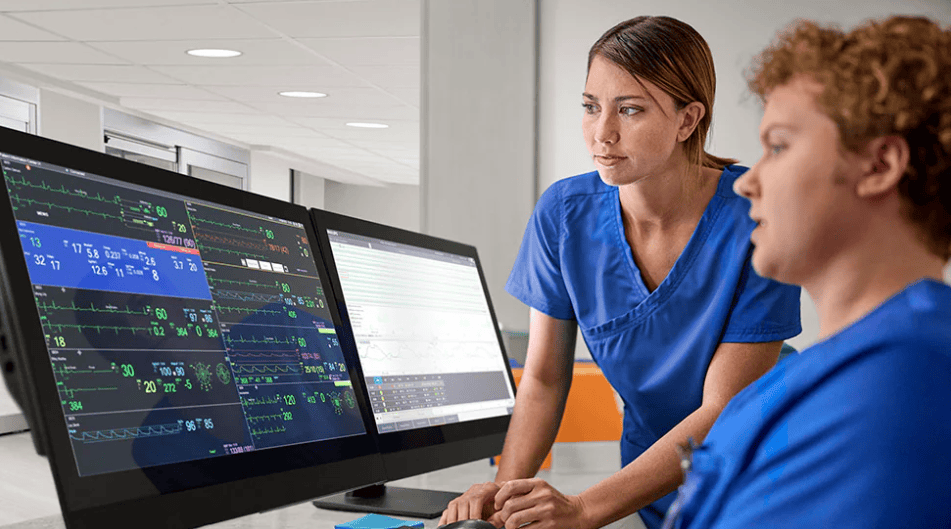
The company’s connected platform aims to link physiologic monitoring data with diagnostic imaging across radiology, cardiology, and pathology.
Royal Philips is highlighting its connected care platform at the Healthcare Information and Management Systems Society (HIMSS) 2026 annual conference, demonstrating how open, interoperable, artificial intelligence (AI)-enabled systems can help health networks link continuous patient monitoring with diagnostic data across care settings and specialties.
Health systems are facing mounting pressure from expanding data volumes and fragmented clinical workflows, according to a release from the company. Philips’ Future Health Index 2025 found that 77% of healthcare professionals report losing clinical time due to incomplete or inaccessible patient data. Disconnected monitoring systems, imaging platforms, and clinical applications compound the problem, delaying care decisions and stretching clinical capacity.
At HIMSS26, Philips is showcasing two capabilities intended to address this fragmentation: enterprise patient monitoring designed to enable longitudinal care intelligence and Integrated Diagnostics, which connects imaging and diagnostic data across the enterprise.
“Care is longitudinal. It doesn’t begin or end at the hospital door,” says Julia Strandberg, chief business leader of connected care at Royal Philips, in a release. “When data is connected across environments, clinicians can see a more continuous patient trajectory rather than disconnected snapshots. That broader context helps reduce noise, improve situational awareness, and allow care teams to focus their time on what matters most: earlier intervention and better patient outcomes.”
Enterprise Patient Monitoring
Philips’ enterprise patient monitoring approach connects physiologic signals with interoperable clinical data—including electronic medical records (EMRs) and third-party device ecosystems—so that patient data remains accessible as individuals move across care settings, from high-acuity inpatient environments through post-acute transitions and after discharge, according to the release.
The company says this longitudinal data foundation is intended to reduce workflow friction for clinical teams and may support strategies for safe, early patient discharge with continued remote oversight, helping to relieve pressure on high-acuity care units.
Integrated Diagnostics
On the diagnostics side, Philips’ Integrated Diagnostics portfolio addresses a common challenge in hospital settings: imaging and diagnostic data that are siloed across radiology, cardiology, pathology, and other specialties, requiring clinicians to navigate multiple viewers, logins, and separate workflows to access the information they need.
The HealthSuite Integrated Diagnostics portfolio consists of cloud-based solutions designed to connect data, integrate workflows, and embed AI across the diagnostic enterprise, according to the release.
“Integrated Diagnostics isn’t about adding another tool. It’s about connecting the diagnostic enterprise, so clinicians aren’t forced to assemble the story themselves,” says Shez Partovi, chief innovation officer and chief business leader of Enterprise Informatics at Royal Philips, in a release. “When cardiology, radiology, pathology, and other diagnostic domains come together on a connected foundation, teams gain a more unified view of the patient, time to diagnosis can drop, and intelligence can be embedded into everyday workflows in a way that truly scales.”
Platform Design and Security
Philips says its platform approach is built with cybersecurity, privacy, and responsible AI practices integrated at its core, according to the release. The company frames security and trust as foundational requirements for enabling data sharing across the enterprise, supporting longitudinal patient context, and scaling AI in clinical decision-making workflows.
Photo credit: Royal Philips