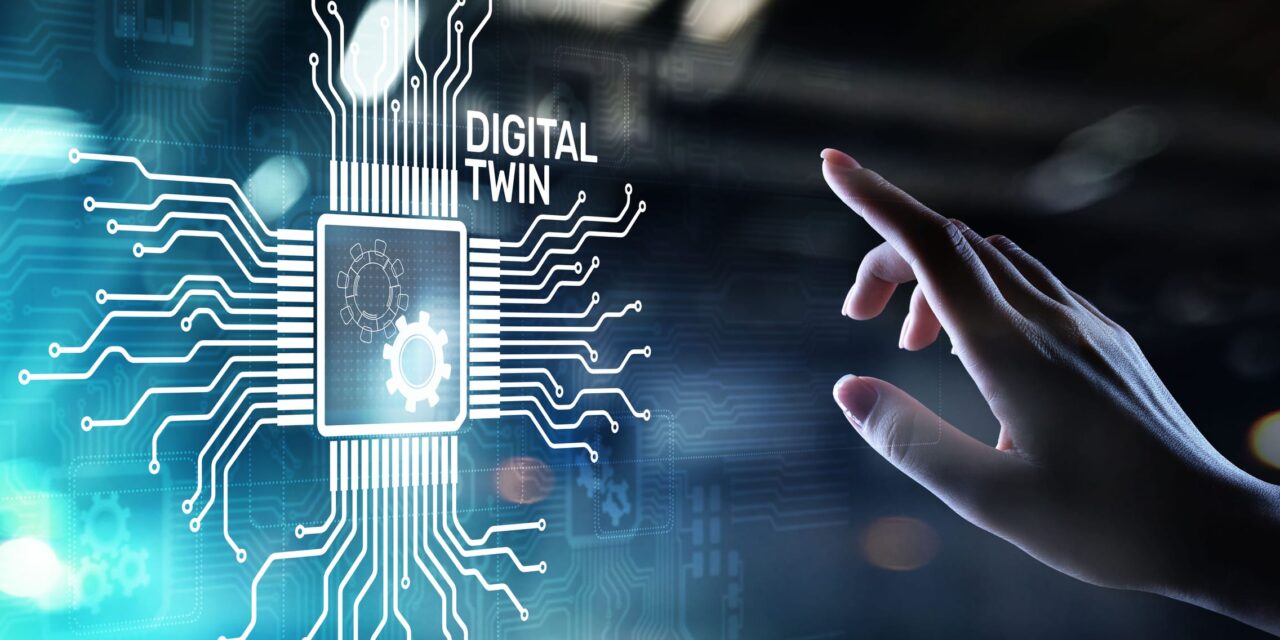
By combining sensor data with virtual models, digital twins are designed to reflect equipment conditions and simulate system performance.
By Joseph Callahan, CEO — Ciright
Healthcare technology management (HTM) professionals ensure medical teams’ equipment runs at peak performance to support patient care and clinical operations. As hospitals face increasing equipment complexity and operational pressures, interest continues to grow in tools that may help HTM teams gain deeper insight into device performance and system behavior.
One technology increasingly discussed in this context is the digital twin.
What Are Digital Twins?
Digital twins are a spatial computing technology that involves recreating real-world physical assets, such as machines, in a virtual environment. Digital twins go beyond VR or AR recreations, although they are rooted in similar technologies. What sets digital twins apart is their ability to ingest ongoing data from sensors connected to the physical asset, allowing the virtual model to reflect current performance and status.
On their own, digital twins can serve as a useful visualization and interaction tool for complex or expensive equipment that is difficult to access directly. More advanced applications involve simulations that use sensor data to model how a machine may respond under various conditions, including non-ideal or stress scenarios.
How Can Digital Twins Be Used in Healthcare?
When used during the design of new hospitals or prior to installing new equipment, digital twins may help healthcare organizations evaluate layouts, workflows, and equipment integration before full implementation. This approach can support more informed planning decisions and greater confidence once systems are deployed.
Digital twins are also being explored as a training tool. In healthcare settings, where staff work with high-risk and high-cost equipment, simulated environments based on real-world configurations can provide a lower-risk way for clinicians and technicians to familiarize themselves with devices and workflows. Because digital twins are designed to closely reflect real equipment behavior, training experiences may translate more effectively to live environments without disrupting patient care.
Another area of interest is predictive maintenance. Because digital twins receive a continuous stream of performance data, they can support real-time monitoring of device and system health. When paired with analytics or artificial intelligence models, digital twin platforms may help identify early signs of performance degradation and prompt proactive maintenance.
What Are the Benefits of Using Digital Twins in HTM?
From an operational standpoint, predictive maintenance supported by digital twins has the potential to reduce unplanned equipment downtime by addressing issues before failures occur. This may help minimize service interruptions and reduce the need for urgent repairs.
Digital twins may also support efficiency by improving visibility into equipment utilization, resource management, and supply chain coordination. In healthcare environments, these capabilities can contribute to improved patient safety by helping ensure that critical equipment remains available and functioning as intended.
It is also important to note that digital twin technology can be applied beyond individual devices. When multiple digital twins are connected, organizations can model larger systems and workflows. In hospital environments—where interactions between equipment, staff, and facilities are complex—this system-level visibility can offer additional operational insight.
Looking Ahead
Digital twins are not a universal solution, and their effectiveness depends heavily on factors such as data quality, system integration, cybersecurity safeguards, and organizational readiness. Implementation costs and technical complexity can vary widely, and healthcare organizations should carefully evaluate use cases before deployment.
As HTM teams continue to explore tools that support reliability, efficiency, and informed decision-making, digital twins represent one option among a growing set of emerging technologies being evaluated across the industry.
ID 143586541 © Wrightstudio | Dreamstime.com
About the author: Joseph Callahan is CEO of Ciright and has spent more than three decades working in technology development and related leadership roles.
Questions or comments? Email [email protected]