From a new dental pavilion to a repair-a-thon for global health, here are five can’t-miss stops heading to Denver this May.
By Alyx Arnett
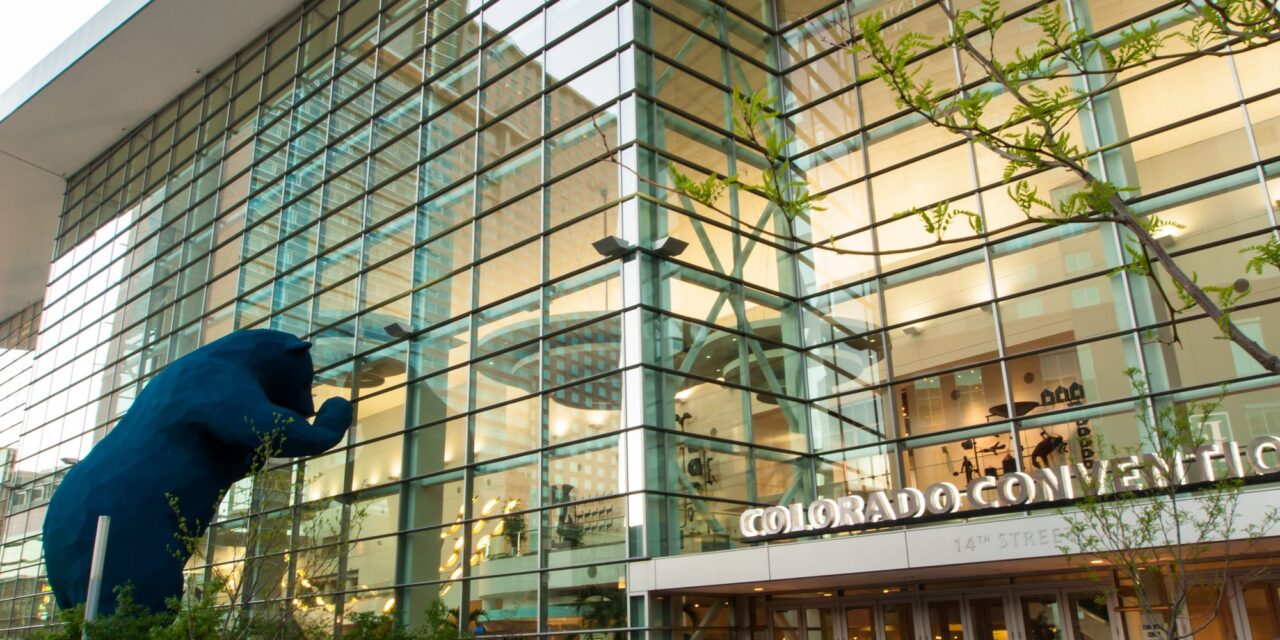
The AAMI eXchange returns May 29 through June 1 at the Colorado Convention Center in Denver, bringing together nearly 2,000 healthcare technology management (HTM) professionals for four days of education, networking, and hands-on experiences. This year’s program includes more than 80 concurrent sessions across newly rebranded tracks covering AI, cybersecurity, workforce development, and compliance—along with an expo hall featuring over 170 exhibitors.
Several additions mark a shift for the event this year. A dedicated dental pavilion opens the expo floor to a segment of HTM that has historically operated on its own. A partnership with Project C.U.R.E. introduces a first-of-its-kind repair-a-thon. And with Joint Commission returning to the event, two sessions will address the changes rolled out under the organization’s Accreditation 360 initiative, which took effect Jan 1, 2026.
“Most people call it the Super Bowl of HTM,” says Danielle McGeary, vice president of HTM at AAMI. “It’s really a place for the community to gather, network, learn, and grow, and it’s just a place for people to unite and come together and really elevate our field, our profession, and the people within the field.”
Beyond the expo floor and education tracks, the schedule also includes a golf tournament on Friday benefiting the AAMI Foundation and the fifth annual AAMI party at Lucky Strike on Saturday night. With a packed schedule across all four days, here are five stops worth planning around.
1. The Dental Pavilion by UptimeServices
One of the most visible changes at this year’s AAMI eXchange is the Dental Pavilion, sponsored by UptimeServices, a dedicated section of the expo hall with space for up to 30 dental vendors, manufacturers, and service providers. The pavilion grew out of AAMI’s acquisition of UptimeServices’ standalone Dental Summit and represents a deliberate effort to bring dental technology professionals under the broader HTM umbrella.
“HTM encompasses all medical equipment, not just parts of it,” McGeary says. “Anyone that services a medical device that touches a patient is part of HTM. And dental care is healthcare too.”
Jinesh Patel, co-founder and CEO of UptimeServices, says AAMI was the right home for the summit because of its role as a gathering point for the entire HTM community. “I see them as like a nucleus of the HTM community,” Patel says. “Healthcare technology management should extend to all aspects of healthcare—not just medical, but dental, eye care, veterinary care, all these other industries that feel sometimes on an island.”
Patel also points to the labor shortage as a practical argument for integration. Cross-training medical BMETs on dental equipment creates a larger pool of qualified technicians without having to build that workforce from scratch. “Instead of trying to build this in a silo where we only want people who know dental, we only want people who know vet or eye care or medical—that should not be how we resource share, especially as we’re constrained with our resources,” he says.
Inside the pavilion, a dedicated dental theater will host half-hour presentations during expo hours. Technical training sessions, offered at no cost, will run during regular education blocks when the expo hall is closed. Confirmed exhibitors include Tuttnauer, DEXIS, Air Techniques, ENBIO Corp, Acteon, and Werther/MGF Air Compressors. Training sessions range from hands-on installation overviews for ACTEON’s XMIND imaging systems to preventive maintenance certification for ENBIO autoclaves.
“The dental manufacturers are not shy to give training and education to technicians out there,” Patel says. “They want the individuals, they want the ISOs, to do the service because they themselves don’t.”
Patel also flags a broader trend worth watching. Medical-dental integration, or MDI, is gaining ground in outpatient settings, with CMS codes now updated to support dental procedures in medical offices. “You’re going to see more dental equipment in places you might not have seen it before,” he says. “You need to skate to where the puck is going and get this training now.”
2. Joint Commission Updates—Two Sessions, Two Angles
With the Joint Commission’s Accreditation 360 now in effect, two sessions at AAMI eXchange will help HTM professionals make sense of the changes—each from a different vantage point. One offers a surveyor’s perspective, the other a health system leader’s.
Dennis Minsent, a life safety code surveyor at Joint Commission with 40 years of healthcare experience, will lead a session on Monday from 10:30 am to 12 pm. His presentation will walk attendees through recent updates to hospital accreditation standards, highlight areas drawing surveyor attention, and explain how the changes affect the structure of the accreditation manual.
One of the most visible updates changes how the standards are organized. The Environment of Care and Life Safety chapters have been consolidated into a single Physical Environment (PE) chapter. Additionally, some requirements have moved to new chapters. Standards related to workplace violence, facility security, and imaging safety now sit under the National Performance Goals chapter.
Across the hospital accreditation manual, more than 700 requirements have been eliminated and many standards streamlined. Minsent says part of his session will help attendees understand how the new structure works.
“HTM leaders will be able to take this knowledge back to their organizations to not only ensure their organization is ready for their next survey, but help ensure that their facilities, equipment, and technology are assets in providing safe, high-quality patient care,” he says.
According to Minsent, equipment maintenance remains a frequent area of concern. He says the top three most-cited elements of performance over the past two years all relate to equipment maintenance documentation. These citations involve non-high-risk equipment maintenance, high-risk equipment maintenance, and documentation related to hemodialysis water testing.
During his session, Minsent will also introduce the Joint Commission’s new SAFEST program—Survey Analysis For Evaluating Strengths—which spotlights performance strengths during surveys and is building a database of leading practices.
“My goal is to prepare HTM leaders so their next survey goes smoothly,” he says.
Earlier that same morning, Samantha Jacques, PhD, vice president of clinical engineering at McLaren Health Care, will offer a complementary perspective in her 8 am session. Her insights are informed by firsthand experience. McLaren Health Care has already undergone two Joint Commission surveys under the new requirements.
Jacques says that although the restructuring eliminated many listed requirements, the expectations surveyors evaluate have not changed dramatically. Instead, she says one of the biggest differences involves the addition of expectations in areas such as human resources, contract management, and National Patient Goals.
One area she expects to draw increased attention from HTM leaders is human resources. Under the updated requirements, organizations must assess role-based competencies at the time of hire and every three years afterward. “This is not the normal annual performance evaluation, but an actual assessment of the staff’s ability to perform the skills required for their role,” she says.
Beyond HR changes, Jacques says her session will cover the PE chapter, quality and metrics, contract management, emergency management, and National Patient Goals.
3. Herman McKenzie’s EQ56 Workshop
Herman McKenzie is a well-known figure in HTM circles. A longtime contributor to AAMI standards development and a former member of Joint Commission, McKenzie has spent decades working in HTM, with a focus on compliance and equipment management. On Monday from 8 am to 2:30 pm, he’ll lead a full-day, in-person workshop on building a medical equipment management program (MEMP) grounded in AAMI’s EQ56 standard.
The session focuses on the administrative framework of an HTM department, including inventory setup, process design, and quality assurance. McKenzie also connects those elements to ISO 13485, ISO 14971, and FDA quality system regulations.
McKenzie taught a virtual version of the course last year. This year, it returns as an in-person workshop, which he says makes a meaningful difference. “Adult learning is interactive,” McKenzie says. “You’re going to find folks who do have great programs, and just during our dialogue and interchange, they can share tips with other attendees.”
A central theme of the workshop is something McKenzie says many HTM programs struggle with: documenting their processes. He often sees teams operating with plans that are either undocumented or no longer reflect the realities of their health system.
“You have so many healthcare systems that are contracting and expanding, and the leaders may have something on paper that may not be considered,” he says. A system that grew from three hospitals to five—or shrank from five to three—may still be operating under a MEMP that no longer reflects how the organization actually functions, he says.
The course also touches on a broader leadership lesson McKenzie says many technicians encounter as they move into management roles. “HTM folks get into the field because they’re very task-oriented, and we can end up being very myopic,” he says. “When we get into a leadership position, it becomes so important about managing the interactions of our teams with the folks that we support. In addition to fixing the equipment, you got to fix the customers.”
McKenzie says the workshop is designed for anyone in HTM, from newcomers learning the basics of a MEMP to experienced leaders evaluating their current program.
“I’m enthusiastic, and it’s an opportunity also for attendees to ask me questions outside of just the course,” he says.
4. Project C.U.R.E. Keynote and Repair-a-Thon
Sunday’s keynote brings Douglas Jackson, president and CEO of Project C.U.R.E., to the main stage to share the story of how a garage operation in the Colorado mountains grew into the world’s largest distributor of donated medical supplies and equipment. The organization has shipped to more than 138 countries and moved 250 semi-truck trailers of equipment in its last calendar year—each container carrying an estimated $350,000 to $450,000 in donated supplies.
The story starts with Jackson’s parents. In the late 1980s, his father, a real estate developer, visited a clinic in a Brazilian favela and came home determined to help. He and Jackson’s mother collected donated equipment, stored it in their garage in Evergreen, Colo, and paid to ship it to Brazil.
“I tease people that everything in America that’s any good starts in a garage,” Jackson says.
Today, Project C.U.R.E. operates 50,000-square-foot warehouse hubs in seven cities—Denver, Nashville, Houston, Phoenix, Chicago, Philadelphia, and Kansas City—and is planning an eighth in Dallas. Jackson says the organization has about 35 paid staff and 35,000 volunteers, including many biomed professionals who help test and restore donated equipment.
He says the most requested items are imaging systems, including ultrasound, X-ray, and C-arms, and the organization never has enough. Most donations come from hospitals replacing equipment.
“A $35,000 hospital bed—you’re certainly not going to sell 500 of those when the hospital changes them out,” he says. “What do you do with all of the product? The answer is, give it to us.”
Jackson says he wants attendees to leave the keynote with a better sense of how their skills can make a difference beyond their own facilities. For biomeds in particular, he sees Project C.U.R.E. as a way to use a specialized skill set in a direct and practical way.
“If you’re a biomed tech, you can go sing in the choir at your church, but that’s not really taking advantage of your skill set,” he says. “This is a great way for somebody who’s got a very specialized skill set to say, ‘I can give something that nobody else can give.’”
That message will carry into a repair-a-thon held at the convention center on Saturday (12 to 5 pm), Sunday (12 to 4 pm), and Monday (12:30 to 3:30 pm). Equipment will be brought in from Project C.U.R.E.’s Denver warehouse, and attendees can help test and restore donated devices. Participants who stay longer than one hour will earn continuing education units toward recertification. Attendees will also have the option to visit Project C.U.R.E.’s headquarters and warehouse for a fuller immersion experience.
It is the first time the organization has partnered with AAMI on an event like this. Jackson also hopes attendees will go home and help connect Project C.U.R.E. with the people at their organizations who decide what happens to surplus equipment.
“If we just had a whole group of ambassadors that went back to their respective facilities and said, ‘Hey, I heard about this group when we were in Denver,’ that would be another great thing they could do for us,” he says.
5. Career Fair and Apprenticeship Graduation
AAMI eXchange has steadily expanded its workforce pipeline programming, and the 2026 event includes several efforts aimed at attracting and developing new talent.
The career fair returns with a new outreach push targeting colleges in Colorado with biomedical engineering and electronics programs. Because there is no HTM-specific academic program in the state, AAMI plans to introduce students to the field as a potential career path within their existing majors. College students who attend will receive a free expo-only pass and can take advantage of free headshots, resume reviews, and conversations with potential employers.
Additionally, on Monday, AAMI will hold an apprenticeship graduation ceremony for participants who completed the program this year. McGeary says demand for the apprenticeship program far exceeds available placements.
“I have 4,400 people now on my list that want to do it,” she says.
The bottleneck, she says, is employer participation. Organizations interested in hosting apprentices can reach out to McGeary through AAMI.
Friday will also include a high school outreach day and a full-day leadership training course run by the College of Biomedical Equipment Technology. The leadership course, running from 8 am to 4 pm, is aimed at mid-level HTM professionals preparing for management and leadership roles.
Together, these programs reflect AAMI’s ongoing effort to strengthen the HTM workforce—introducing the field to students, supporting apprentices as they enter the profession, and helping current professionals move into leadership roles.
At the 2026 AAMI eXchange, McGeary hopes attendees leave feeling empowered. “I hope they walk away feeling that they can do more, that they’re capable of doing more,” she says, “and that they’ve made new connections through being at the eXchange.”
ID 42056032 © Arinahabich08 | Dreamstime.com