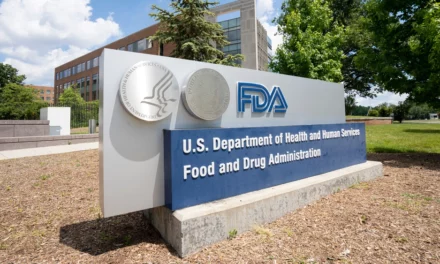

The number of medical devices affected by recalls reached a five-year high in the first half of 2026, according to Sedgwick’s latest Recall Index.
Medical device recall events fell slightly in the first half of 2026, but the number of units affected soared to a five-year high, according to Sedgwick’s 2026 Edition 2 US Product Safety and Recall Index.
The US Food and Drug Administration issued 462 medical device recalls in the first half of 2026, a 5.1% decrease from the 487 events recorded in H1 2025. However, the number of units affected jumped 516.8%, rising from 50.75 million in H1 2025 to 313.07 million in H1 2026.
Leading Causes of Medical Device Recalls
Device failure was the top cause of medical device recalls in H1 2026, accounting for 66 events, down from 80 in H1 2025. Software issues followed with 54 events, a decrease from 75 in the same period a year earlier. Mislabeling ranked third with 49 recalls, consistent with the 48 events reported in H1 2025.
By volume, sterility drove the largest share of recalled units. Sterility issues accounted for 179.45 million affected units, including two separate recalls of convenience kits that together affected 172.33 million units. Products outside of specifications ranked second, with 31.37 million units affected—driven by recalls of 15.80 million procedure kits and 7.84 million neurological sponges. Mislabeling was third by volume, with 19.86 million units recalled.
Class I Recall Volume Reaches 3-Year High
Both Class I and Class II recalls saw fewer events but greater unit impact year-over-year. H1 2026 recorded 51 Class I recalls involving 53.43 million units—the highest volume of affected units for Class I medical device recalls in three years—and 405 Class II events affecting 259.59 million units. Class III recalls increased slightly to six events, affecting 55,036 units.
July Data Shows Rising Event Count, Declining Volume
In July 2026, medical device recalls climbed to 102 events, up from the H1 2026 monthly average of 77. However, the number of units recalled fell 89.3%, from an H1 monthly average of 52.18 million to 5.60 million in July.
Sterility was the most frequently cited cause in July, with 14 events, followed by software with 13 recalls and safety with 10. Products outside of specifications led by volume with 1.49 million units affected, largely tied to a single neurosponge recall. Parts issues ranked second with 1.04 million units affected, driven by a recall of 988,700 distal covers, followed by user error/incorrect use with 776,311 units in a single event.
The FDA classified 12 July medical device recalls as Class I, affecting 413,213 units, and 90 as Class II, affecting 5.18 million units. No Class III recalls were recorded.
Sedgwick Highlights FDA Regulatory Developments
Beyond recall trends, Sedgwick’s report highlighted several recent US Food and Drug Administration (FDA) initiatives affecting the medical device industry, including a new pathway intended to accelerate Medicare coverage for certain breakthrough devices and a pilot program testing shorter FDA inspections.
In April, the FDA announced the Regulatory Alignment for Predictable and Immediate Device (RAPID) coverage pathway in partnership with the Centers for Medicare & Medicaid Services (CMS). According to the report, the program is designed to expedite access to certain FDA-designated Class II and Class III Breakthrough Devices that address unmet medical needs among Medicare beneficiaries.
To qualify, devices must be the subject of an Investigational Device Exemption study enrolling Medicare beneficiaries and evaluating clinical health outcomes agreed upon by the FDA and CMS. Certain Class II devices must also participate in the FDA Total Product Life Cycle Advisory Program.
Sedgwick reports that the FDA expects the streamlined approach could enable Medicare national coverage and payment within two months of FDA market authorization, compared with a year or more under the current pathway.
The report also highlighted an FDA pilot program using shorter, focused screening assessments for human and animal foods, biologics, medical products, and clinical research programs. The assessments are designed to be completed in one day and complement, rather than replace, standard FDA inspections.
As of late April, approximately 46 one-day assessments had been completed, with most resulting in No Action Indicated outcomes, according to Sedgwick. The FDA plans to continue the program through fiscal year 2026. Higher-risk or more complex facilities are excluded from the abbreviated reviews.
Attorneys with Foley & Lardner note in the report that the pilot does not represent a relaxation of FDA inspection standards but rather a different approach to allocating inspection resources.
Looking ahead, Sedgwick points to the FDA’s growing use of AI-enabled technologies to analyze data and aggregate risk profiles as another development for the medical device industry to watch. The report says the technology could help the agency more effectively identify organizations that may not be meeting regulatory requirements, including reporting obligations and operational requirements.