Deborah Geneugelijk details the unique challenges and creative solutions required to maintain medical technology on a floating hospital.
By Alyx Arnett
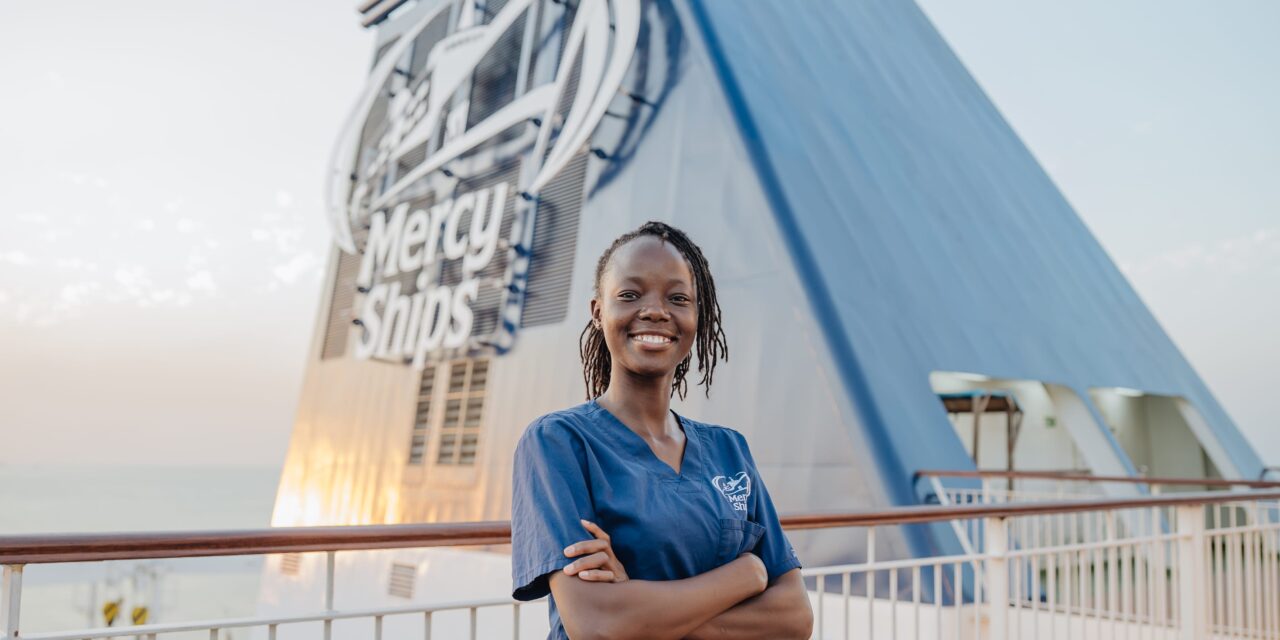
For most healthcare technology management (HTM) professionals, a stable floor and controlled environments are givens. For Deborah Geneugelijk, a biomedical engineer with Mercy Ships, they are luxuries. Her workshop is a hospital ship navigating the coasts of Africa, where a moving vessel, high humidity, and long supply chains demand ingenuity and adaptability.
Geneugelijk’s journey into the field began in her home country of Ghana. A love for engineering, inspired by watching her uncle work as a mechanical technician, merged with a desire to work in healthcare. When she discovered biomedical engineering in a university coursebook, it seemed like the “golden opportunity” to combine both passions, she says. Years later, after seeing the patient stories shared by Mercy Ships on LinkedIn, she felt a similar calling.
One day, Mercy Ships posted the need for a biomedical technician. “It was on our birthday, and I told my twin sister I was going to apply for it and would like it as a birthday gift from God,” she says. A few months later, she began a six-month commitment that has since stretched into four years, taking her from volunteer to a staff role supporting biomed teams across the fleet.
Ingenuity in a Low-Resource Environment
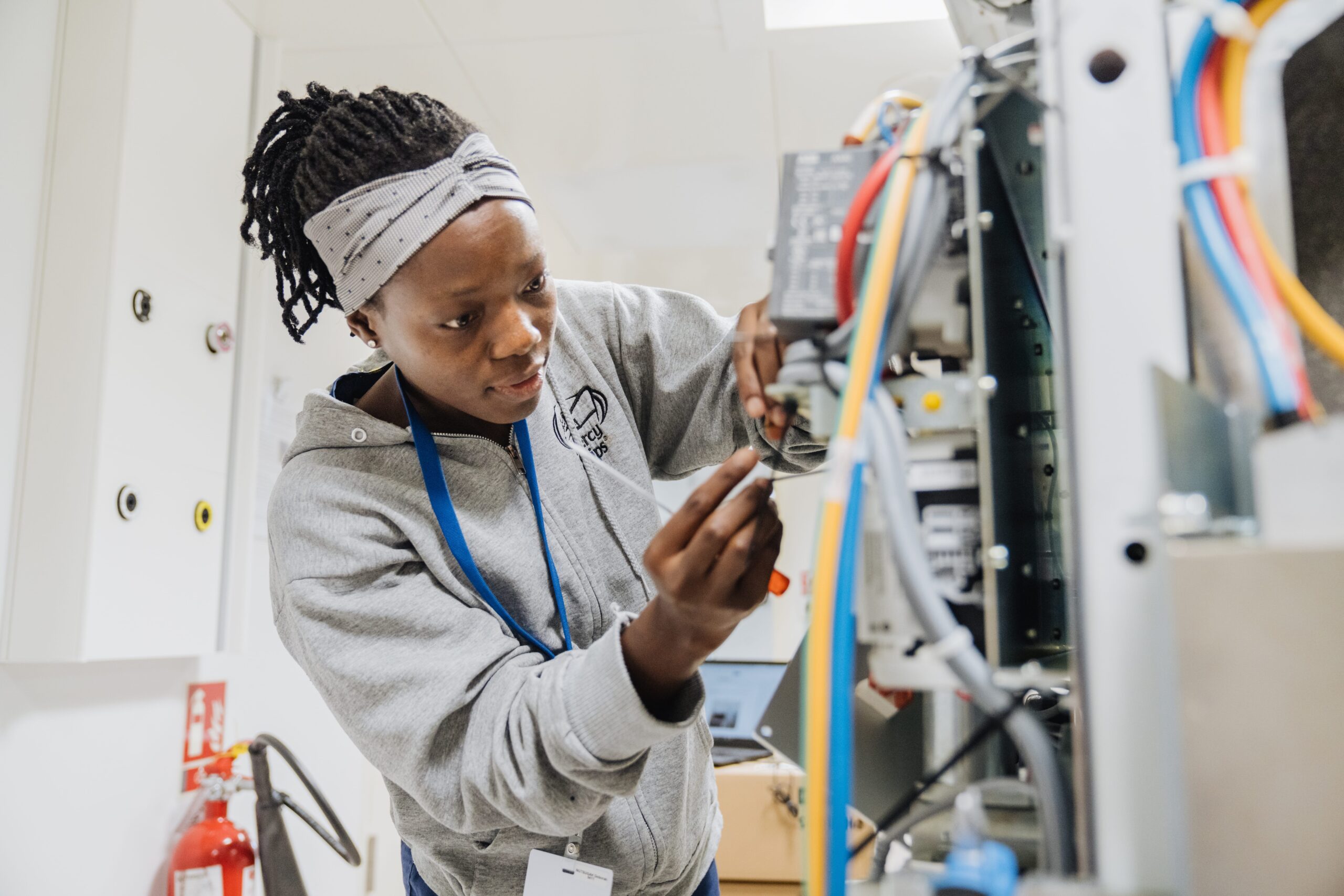
Working on a hospital ship means confronting problems that land-based biomeds rarely face. With parts containers taking months to arrive from the US or Europe, immediate replacement is often not an option. This reality forces a return to component-level creativity. Geneugelijk learned this on her very first repair: a patient monitor with a broken power button. The machine-soldered mainboard made a standard fix impossible.
“If that is broken, you need to order a new board,” she says. “But at that time, we could not order a new board, and we just needed the equipment ASAP.” Undeterred, Geneugelijk carefully scraped away the insulation on the underside of the board, found a connection point, and resoldered the part herself. “I tried it, and then it worked,” she says. “That was the start of the many creative solutions I came up with onboard.”
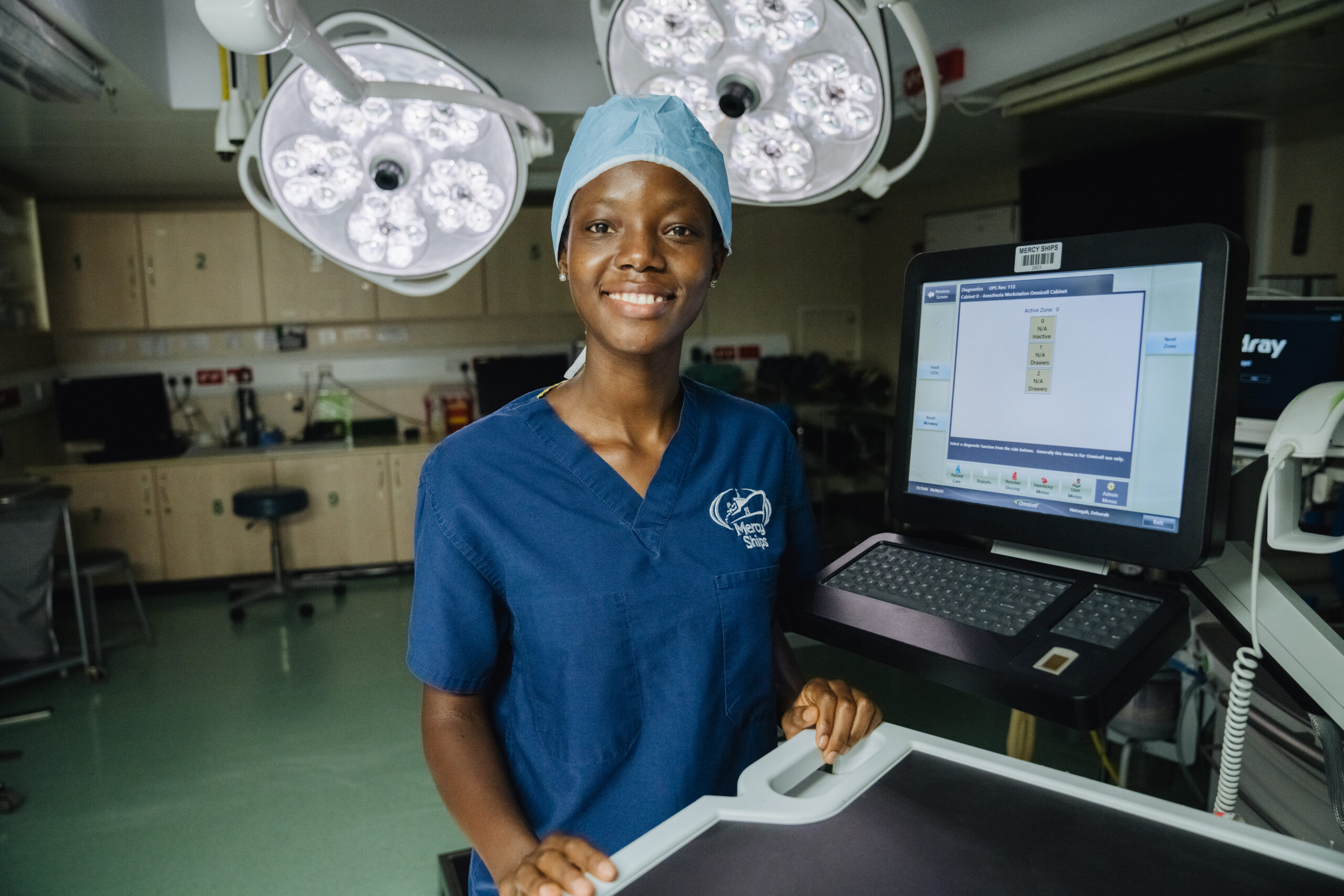
This resourcefulness is critical. To ensure surgeries for patients who have waited their entire lives are not canceled, the biomed team must be meticulous with preventive maintenance and creative with repairs. This is especially true for single-asset systems like the ships’ Philips CT scanners. Due to their remote locations, Mercy Ships biomeds like Geneugelijk receive the same advanced training as the manufacturer’s field engineers.
“Because we are so far away from help … we got this training by Philips so that we are able to act as Philips engineers on site,” she says.
Keeping a Level Head at Sea
Perhaps the most unusual challenge is the ship itself. The constant, subtle movement of the vessel makes calibrating sensitive equipment difficult in ways most hospital-based teams never encounter.
“The ship is not as stable as land; it moves a lot side to side, and a spirit level does not work on a ship,” Geneugelijk says.
That movement directly affects equipment that depends on precise leveling, including weighing scales and operating lamps. For portable devices, the team often waits until the ship is docked and moves equipment onto land to perform maintenance and calibration.
In more urgent situations, the solution requires coordination beyond the biomed team. “When it’s getting too much and they are doing very delicate surgery, like eye surgeries, and it’s not possible to stay in place, we call the chief officer,” she says.
The ship’s crew can then adjust water in the ballast tanks to help stabilize the vessel—an unusual but necessary step to maintain safe operating conditions.
Additionally, environmental factors like heat and humidity also pose a constant threat, risking rust and moisture damage to sensitive electronics. The team uses sensors to monitor conditions and works closely with the ship’s hotel engineering department to maintain climate control in the hospital, ensuring equipment operates within its specified limits.
A Full-Circle Journey Home
While the technical work is demanding, Geneugelijk’s mission is personal. Later this year, the Global Mercy will sail to Ghana for a 10-month deployment, giving her the opportunity to serve in her home country after years of working abroad.
“I was waiting for this, so I’m very excited that the ship is coming,” she says.
For HTM professionals in traditional hospital settings, her experience underscores how much environment shapes the way problems are solved. On land, ready access to parts and vendor support can make replacement the default. On the ship, that option isn’t always available.
Geneugelijk says these constraints push biomeds to think differently. “To be able to think out of the box—that is what qualifies engineers,” she says.
Photo caption: Deborah Geneugelijk, a biomedical engineer with Mercy Ships, stands aboard one of the organization’s hospital ships, where she maintains medical equipment in low-resource, maritime conditions.
Photo credit: Mercy Ships
Alyx Arnett is chief editor of 24×7 Magazine. Want your story featued? Email [email protected].